In November 2025, the OECD warned that African equity markets were becoming ‘shallower and less liquid’, noting that African companies accounted for ‘only 1% of the total value of equity raised on stock markets globally since 2000’.
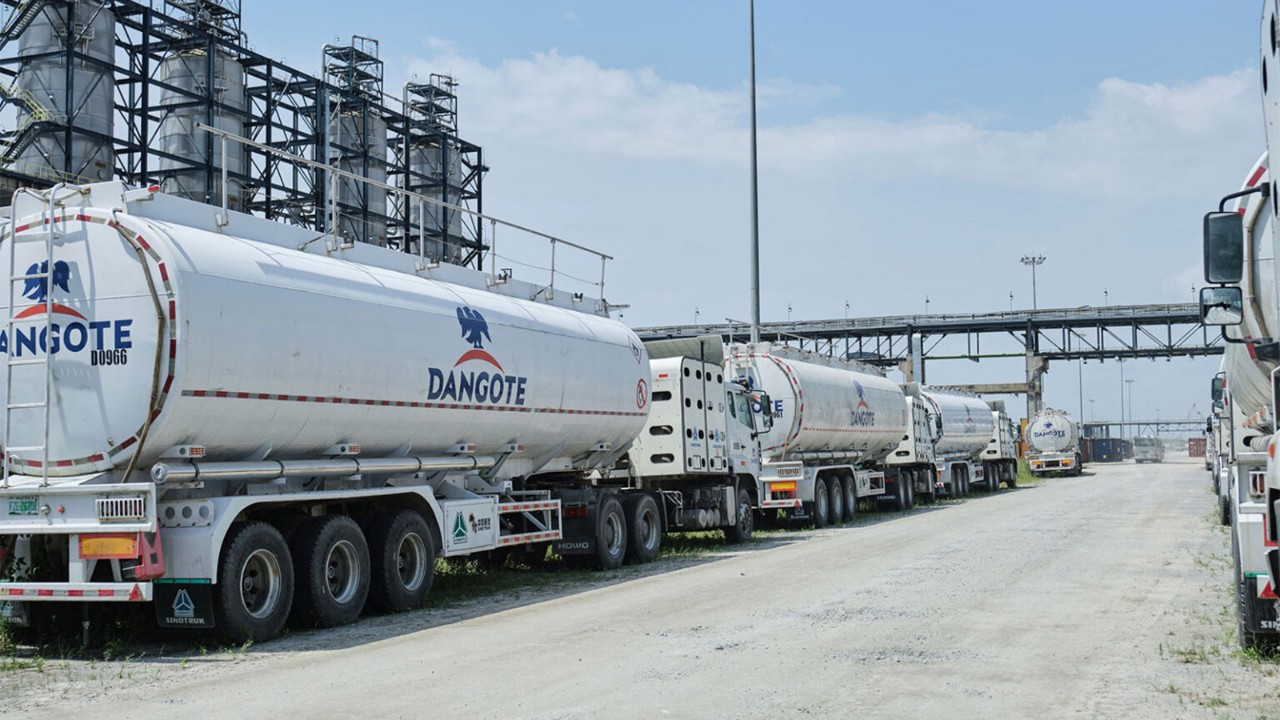
Almost 10 months later, billionaire Aliko Dangote opened the continent’s biggest initial public offering (IPO) for his giant refinery in Lagos. He is seeking to raise US$1.62bn by selling 4.1 billion shares. Dangote Petroleum Refinery and Petrochemicals FZE is expected to list on the Nigerian Exchange (NGX) later this year. Global depositary receipts (GDRs) and special approvals have opened the offer to investors in Kenya, Rwanda, Botswana, Egypt and Ethiopia.
‘You can raise large amounts without having to attract foreign investors’
Wangari Kebuchi, managing director at Enterprise Global in Kenya, says the deal matters ‘less because of its size than because of what it signals’ about African stock markets. She adds: ‘Aliko Dangote could have gone to London or New York.’
Samuel Sule, chief executive of Renaissance Capital Africa, calls the deal ‘a unifier of capital markets’ because it combines GDRs across several markets with strong retail demand. ‘That is new. It hasn’t been done before,’ he says. ‘It has now been proven that you can raise large amounts in markets that are essentially African without having to attract foreign investors.’
Market by market
In March, NGX Group hosted leaders from the African Securities Exchanges Association (ASEA), including top executives from several exchanges, who also toured Dangote’s refinery complex.
On 5 October, Kenya’s capital markets regulator approved a GDR prospectus and licensed several local firms to work with Nigerian counterparts. In Rwanda, investors had to register with the regulator first. They are ‘assisted by authorised intermediaries but registered in Nigeria’, Celestin Rwakumbuka, chief executive of the Rwanda Stock Exchange, told Reuters. Botswana was chosen to host the southern African portion of the IPO through GDRs, which also serves as the route for Egyptian investors. In Ethiopia, only qualified investors, meaning high-net-worth individuals and institutions, may apply.
‘One deal is an event; a pipeline is a market’
On 8 October, six days before the IPO’s initial closing date, Reuters reported that the ‘patchy take-up outside Nigeria shows how the continent’s fragmented capital markets continue to constrain cross-border investment’. The offer was later extended to 27 October.
No silver bullet
Ayokunle Olubunmi, head of financial institutions ratings at Agusto & Co, says that apart from Nigeria and South Africa, most markets are ‘still quite shallow’.
He believes the IPO could improve investor education, market structure and settlement, and could open the door to crossborder listings. Still, ‘it is not a silver bullet. If we treat it as just a transaction, we won’t see any difference. Local players need to roll up their sleeves.’
Kebuchi says the IPO ‘is a turning point only if others follow. One deal is an event; a pipeline is a market.’
‘The money is here; it just isn’t working’
The African Exchanges Linkage Project (AELP), run by ASEA and the African Development Bank, went live in December 2022 and now connects 11 exchanges across the continent, including the BRVM which serves eight countries in West Africa. Another phase could bring the total up to 15 stock markets.
‘A broker in Nairobi can buy a Lagos-listed share without opening an account in Nigeria,’ Kebuchi says, adding that the Dangote IPO is ‘a useful stress test’. ‘The pipes now exist. The harder questions are currency convertibility, settlement and tax.’
Sule adds that linkages also need ‘regulation that is in sync’ and strong protection for retail investors.
Availability issue
One issue for stock markets is the availability of cash for investment. The OECD says pension funds and insurers play ‘a limited role’ in Africa. Their assets are small and heavily invested in government securities, and low incomes and informal work hold back pension savings.
‘The money is here; it just isn’t working,’ Kebuchi says. African pension funds hold more than US$600bn, but in many markets less than 10% goes into productive sectors, she adds. Kenya keeps about half of its pension assets in government securities, and Nigeria keeps over 55%.
She says Southern Africa shows that policy can change this. Namibia’s main state pension fund invests more than the 45% legal minimum at home, and Botswana’s domestic requirement will rise to at least 50% by the end of 2027.
‘Domestic capital should lead, and international capital will follow conviction it can see’
Temi Popoola, chief executive of NGX Group, says the challenge is ‘how to connect that capital to investment opportunities across the continent.’ Sule describes ‘a consolidation play’ in which pooled capital ‘builds on capital’. For Olubunmi, if Africa captured ‘even a tiny share’ of retail savings, ‘you would be shocked at the boom’.
‘Domestic capital should lead, and international capital will follow conviction it can see,’ Kebuchi says. Sule notes that foreign investors want liquidity and ‘FX rates that show true value’.
Governance matters, too. The OECD points to weak boards at listed and state-owned companies; Sule notes that well-run large companies that disclose pay dividends attract investor attention.
Qualified optimism
African stock markets have recorded at least 15 new listings this year, including IPOs, in countries such as Egypt, Ethiopia, South Africa, Kenya, Nigeria, Ghana, Morocco and Angola. In Egypt, MNT-Halan debuted on 20 October, the country’s biggest IPO in dollar terms since at least 2021.
Seven companies with significant African operations have raised at least US$100m each through IPOs so far this year, for a total of US$2.6bn, according to Renaissance Capital.
Kebuchi calls the 2027 outlook ‘promising, with conditions’. Dangote has brought his fertiliser listing forward to 2027, and NGX is expecting new issuers, including state oil firm NNPC. The Kinshasa Stock Exchange is due to launch between June and December 2027. Namibia wants listed assets to rise from about 17% of GDP to 75% by 2035.
The risks include currency swings, interest rates and elections. ‘But for the first time in a long while, the story is being written from inside the continent,’ she says.


