
When Ozow was named among Africa’s leading technology businesses in the AT50 Index, it marked a significant milestone in the evolution of the South African payments company. For Rachel Cowan FCCA, Ozow’s interim chief executive, it was also recognition of how far both the business and the country’s fintech sector have come.
‘It’s definitely a recognition of what we’ve built at Ozow,’ she says. ‘I’m really proud of my team for what they’ve achieved.’
The AT50, launched by the Johannesburg Stock Exchange and London Stock Exchange, showcases high-growth African technology businesses. Cowan believes Ozow’s inclusion highlights the strength of South Africa’s innovation ecosystem, which can sometimes be overshadowed by the continent’s larger fintech centres.
‘I often read a business through the lens of a P&L’
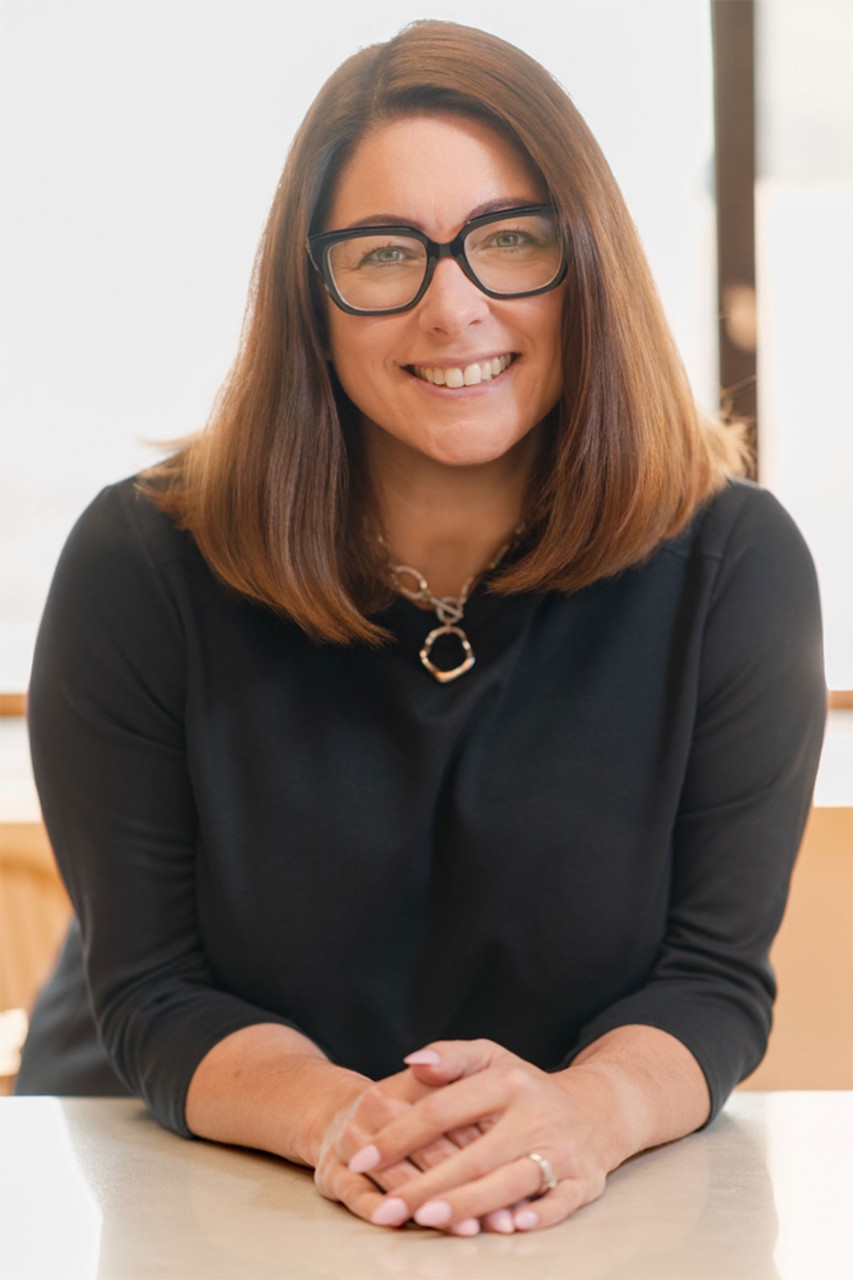
‘The narrative around fintech is often based around countries like Nigeria and Kenya,’ she says. ‘Those markets have produced some really impressive businesses, but a lot of the innovation came from working around gaps in the banking system.
‘The South African story is slightly different. We’ve got a very sophisticated banking and regulatory infrastructure, so innovating here isn’t about filling a void; it’s about building something new within an established system, and that can be much harder – that’s what makes the AT50 recognition meaningful.’
Pioneering approach
Founded 12 years ago, Ozow began by solving a key problem: How could banked South Africans without a credit or debit card pay merchants online, directly from their bank account? Today, it has evolved into a full-service, end-to-end payments provider serving everyone from large enterprises to small businesses.
‘We started as South African pay-by-bank pioneers,’ Cowan explains, noting the role that open banking is playing in creating a modern payments infrastructure against the background of a cash-led, yet sophisticated, banking and regulatory environment. ‘Now, we’re a full-stack payment service provider, which is merchant-focused and solution-orientated around how we actually embed payments into a merchant’s business.’
‘Against the flow’
Originally from the UK, Cowan gained her ACCA qualification while working for Taylor Cocks, an accountancy firm based in Portsmouth, before moving to Cape Town with her South African husband in 2010. While many were leaving South Africa at the time, the couple chose to build their lives there.
‘Finance gives you a very deep discipline in evidence over opinion and emotion’
‘We were going against the flow of traffic,’ she says. ‘But it has been an amazing country to bring our children up in.’ With Table Mountain as a backdrop, and a second home along the coast at Knysna, her family have fully embraced the outdoor opportunities available around the Cape region.
Professionally, the move gave Cowan the opportunity to move beyond finance, while still retaining the valuable skills and discipline that come with an accounting background. After joining digital marketing agency Quirk as finance manager in 2011, she rose to CFO before helping oversee its sale to WPP. Subsequent senior finance and operational roles eventually led her to Ozow, where she became COO before stepping into the interim CEO position.
CV
2025
Interim CEO, Ozow, Cape Town
2022
COO, Ozow
2021
Head of operations (fintech), Ozow
2020
Chief operating and financial officer, Red & Yellow Creative School of Business
2017
CFO, Digital Frontiers Institute
2011
Group financial director, Quirk
2001
Senior accountant and tax adviser, Taylor Cocks Chartered Accountants, Portsmouth, UK
Although she now leads the whole business rather than a single function, Cowan still approaches decisions through the mindset of an accountant.
‘I work quite naturally through the numbers,’ she says. ‘I often read a business through the lens of a P&L. The P&L for me is a map of how the company actually works: where the margin is, where the cost is, what’s scaling, what isn’t and where the profit lies.’
‘If a customer has a bad experience through fraud or downtime, you’ve lost them’
That ability to connect financial performance with commercial reality gives her confidence when making difficult decisions. ‘When decision-making, I’m already tracing it through to what it does to the numbers,’ she says. ‘Finance gives you a very deep discipline in evidence over opinion and emotion. I’ll always ask a second or third question rather than just accept the first answer.’
From depth to breadth
The biggest adjustment has been shifting from specialist expertise to broader leadership. ‘When you move from finance or operations into a CEO role, you’re moving from depth to breadth,’ she says. ‘You can’t stay in one lane anymore.’
Instead, she sees her role as asking the right questions of technology, product and commercial leaders while understanding how every decision ultimately affects the economics of the business. That broad perspective is particularly valuable in payments, where innovation must always be balanced against trust.
‘Somebody, somewhere has to own the integrity of what AI produces’
‘You can have the best technology in the market,’ she says, ‘but if a customer has a bad experience through fraud or downtime, you’ve lost them and you’ve lost that trust.’
Rather than viewing innovation and risk as competing priorities, she sees them as two sides of the same coin. ‘I don’t really see it as a trade-off. I see it as a balancing act.’
AI as value creator
The same philosophy shapes her view of artificial intelligence. Rather than replacing finance professionals, she believes AI is redefining where they create value. ‘When a tool like Claude or ChatGPT can produce analysis that’s sometimes really quite exceptional, the value moves from producing the numbers and building the spreadsheet to actually being able to interpret them and deciding what to do.’
For finance professionals, that means becoming more commercially focused and developing stronger business judgment. ‘It’s about learning the business model, getting commercially fluent, understanding the products and becoming more of a business partner.’
She expects routine finance processes to become increasingly automated, but argues that accountants’ instincts remain indispensable. ‘Somebody, somewhere has to own the integrity of what AI produces,’ she says. ‘It’s the thinking that you can’t replace. You will always need human judgment.’
‘The pipeline is there, but women fall off on the way to the top’
Cowan says her accounting qualification certainly helped open doors in her career. ‘I’ve always been intrigued by business and business owners,’ she says. ‘Getting an accounting qualification was an important step in understanding business.’
Diversity champion
As one of the relatively few women leading a major African fintech, Cowan is equally passionate about improving diversity across the sector. While progress has been made, she believes the movement of women into senior leadership roles remains too slow.
‘The pipeline is there, but women fall off on the way to the top,’ she says. Creating change requires action throughout education, recruitment and career development, but it also depends on representation in the boardroom. ‘Some things can only be done if there are women’s voices in the room,’ she says. ‘Boards and investors have to rally for that type of setup in a business.
‘I have a strong view that we, as a business, must give women the opportunity to continue growing their careers,’ she says. ‘Having three very smart, powerful and credible women in Ozow’s executive team, making up 50% of the leadership, gives people something to aspire to.’


