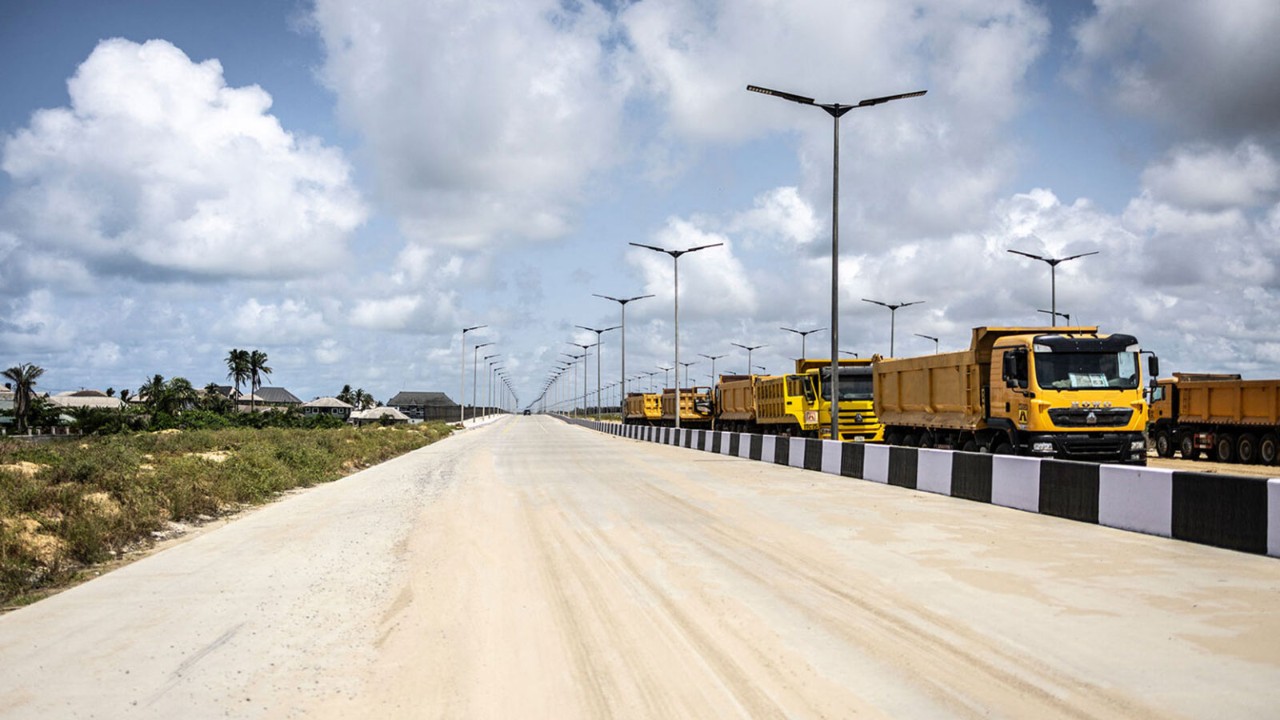
Kenya made headlines over the summer with its plan for a new underground railway in Nairobi, which should help to reduce traffic congestion in the city. Yet despite the scale of the project – an estimated US$7.78bn in the first phase alone – the railway will make only a small dent in Africa’s overall infrastructure gap. This gap – which spans sectors such as energy and water as well as transport – is so immense that up to US$170bn annually will be needed to close it, according to the African Development Bank Group.
The State of Africa’s Infrastructure Report 2026, published by the Nigeria-based Africa Finance Corporation (AFC), specifically highlights that despite progress, the continent needs to improve connections between different transport systems to move goods efficiently across borders.
‘When it rains, the economy stops’
‘Infrastructure is generally an enabler for trade and productivity as well as human capital development and overall economic prosperity,’ says Abiola Osho, vice president for investment at the AFC. ‘But what we see in Africa today is a fragmented infrastructure layout that is not supporting the needs of today or the aspirations of the continent for tomorrow.’
Brakes
Every class of African transport infrastructure needs large-scale investment. Yaw Appiah Lartey, Africa leader for infrastructure and capital projects at Deloitte, based in Ghana, believes greater investment in roads would be a good starting point. ‘We depend on primary agriculture,’ he says, ‘but the road infrastructure does not support the transportation of food and other agricultural products from one section of the continent to another.’
Often unpaved and made from gravel or compacted earth, Africa’s rural roads are notorious for their poor condition. They are also vulnerable to erosion during the rainy season, when they are often impassable. ‘When it rains, the economy stops,’ says Jaye Connolly, chairman and CEO of RippleNami, a provider of technology solutions to African governments and companies. ‘Farmers cannot get produce to market, mothers cannot reach a clinic, children miss school.’
‘States need credible operational and maintenance arrangements’
The state of the railway system also acts as a brake on social and economic expansion. As Appiah Lartey points out, some countries don’t have railways at all. ‘And even where they do exist, the railway infrastructure is often in a deplorable state,’ he adds. The picture, he says, doesn’t get much better when it comes to ports and airports.
Barriers
Lack of budget is a major barrier to plugging Africa’s transport infrastructure gap. Projects are expensive, with costs typically running into billions of dollars. Turning to public funds is not necessarily feasible for governments wrestling with high levels of sovereign debt. The African Forum and Network on Debt and Development has identified 24 African countries as being in debt distress or at high risk of it.
In theory, public-private partnerships (PPPs) are a sensible option for African countries looking to finance and implement transport infrastructure. They have not always been successful in practice.
‘Many PPPs have not worked because the African countries concerned do not have the right legal framework to support them,’ Appiah Lartey explains. He also argues that governments need to create appropriate incentives for global infrastructure developers to support infrastructure development in Africa.
‘Blended financing is the way forward for infrastructure in Africa’
Another issue highlighted by Appiah Lartey, is that governments do not appoint the right advisers to help undertake detailed feasibility studies or assessments of a project before they break ground.
Muhammad Adeel, a research fellow in transport analysis at the Centre for Transport and Society at the UK’s University of the West of England, believes progress is also hindered by institutional barriers. ‘A recurring challenge is fragmented institutional responsibility,’ he says, ‘with agencies often having limited financial resources, authority or technical capacity to manage urban mobility effectively.’ Governments, he adds, need ‘credible arrangements for operating and maintaining transport infrastructure after it has been built’. Tolls, for example, are one way to cover maintenance costs.
Models
Nairobi’s proposed underground railway will be funded through a blended model that includes money from government as well as from development finance institutions (DFIs), private equity, pension funds, and climate finance and green funds.
Blended financing is the ‘way forward for infrastructure financing in Africa’, Osho says. The process creates an ‘alternative capital structure’ by bringing together commercial capital with DFI funding and climate-earmarked resources. ‘Every pool of capital has its strengths and limitations,’ he says. ‘By blending them together, the strengths of one pool can address the limitations of another.’
Nonku Ntshona, director of strategic growth for Africa with advisory firm WSP, sees the benefits of blended financing as providing access to skills as well as capital. DFIs, in particular, bring experience and know-how for African projects. ‘The infrastructure in some African countries is not as developed as in others,’ she says, ‘so they need an organisation with experience to come in and provide support with not just finance but also implementation.’
‘We should be building market plumbing for deploying African capital’
Ntshona, based in South Africa, says DFIs and investors are interested in African transport infrastructure not only due to the scale of opportunity, but also because of the role these projects can play in transforming the lives of communities. ‘African countries have growing populations,’ she says, ‘but governments can’t do everything to meet their transport needs. They need the help of the private sector for funding and implementation.’
Domestic capital pools are another source of potential cash for transport projects. Osho says institutions like banks and pension funds could be sitting on around US$4 trillion in capital waiting to be exploited. ‘We should be building the underlying market plumbing and seek enabling regulatory constructs that can allow deployment of the capital on the continent into infrastructure.’
Collaboration
Investment in cross-border transport infrastructure would allow African countries to industrialise their economies. More interconnected transport systems would also help facilitate the Africa Continental Free Trade Area Agreement, which has more participating countries than any other free trade area in the world.
For Osho, African countries need to collaborate more on interconnected transport systems and infrastructure that enable both people and goods to travel more freely: ‘On this issue,’ he says, ‘Africa needs bold, innovative, collaborative and visionary leadership.’


