Beneath the hills of the Lake District, a massive project is underway to upgrade 110km of pipeline and tunnels that supply drinking water to 2.5 million people across the north-west of England. The Haweswater Aqueduct Resilience Programme (Harp) will take around nine years to complete and cost in the region of £3bn.
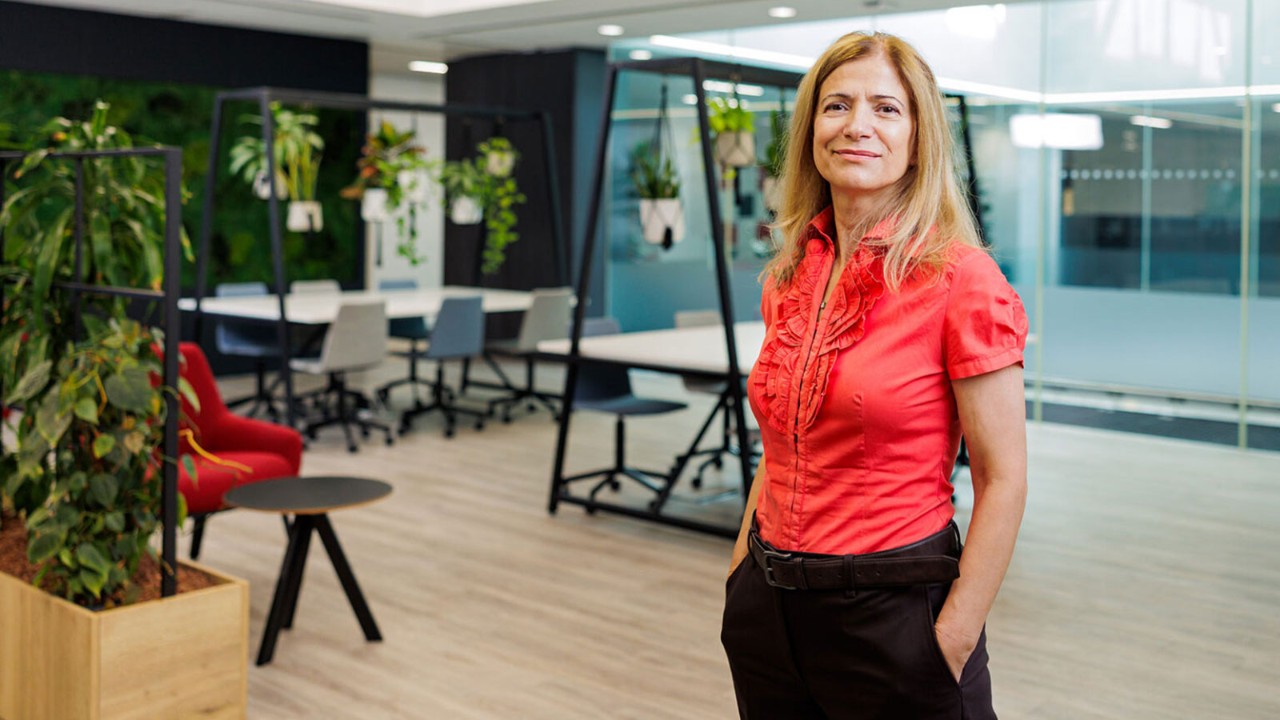
Managing the costs and performance of this massive infrastructure project over the coming years will rest on the diligent preparatory work carried out by Ganimete Shabani FCCA, who was until recently the project’s head of finance.
The most important role for finance on large infrastructure projects, she stresses, is to ‘get the foundations right, because you can’t go back and change things later’.
‘I made a strict plan, as I usually do, to rebuild what I had left back home’
Shabani’s role overseeing the finances of a succession of massive infrastructure projects in the UK is all the more remarkable after she was forced to rebuild a career that was shattered by war.
Born and raised in Kosovo, Shabani was a qualified accountant and FD at a well-known food distribution company when the brutal regime of Slobodan Milošević forced her to leave her home in 1998. She arrived in London as a single parent of a five-year-old. ‘I spoke three languages,’ she says. ‘But unfortunately, English wasn’t one of them.’
She was determined, she adds, to treat the language barrier as a project rather than a setback. Her mantra was to ‘learn the language, get back into finance, do it properly’.
Within three years, her English was good enough to go back to university and study for a master’s in finance and accounting, which she completed with distinction.
Rebuilding
Her first official finance role in the UK came with learning provider Bradfield Group. ‘There was an opportunity to establish an in-house finance function, so I built one. That was the moment I knew that I belonged. Everything since has followed from that.’
Converting her local qualification into a British accounting equivalent was mired in post-war difficulty, so she chose to train with ACCA rather than wait. ‘I made a strict plan, as I usually do,’ she explains and took three papers in one sitting. ‘I just wanted to get there quicker, and to rebuild what I had left back home – that was the ultimate goal.’
‘Get the foundations right, as you can’t go back and change things later’
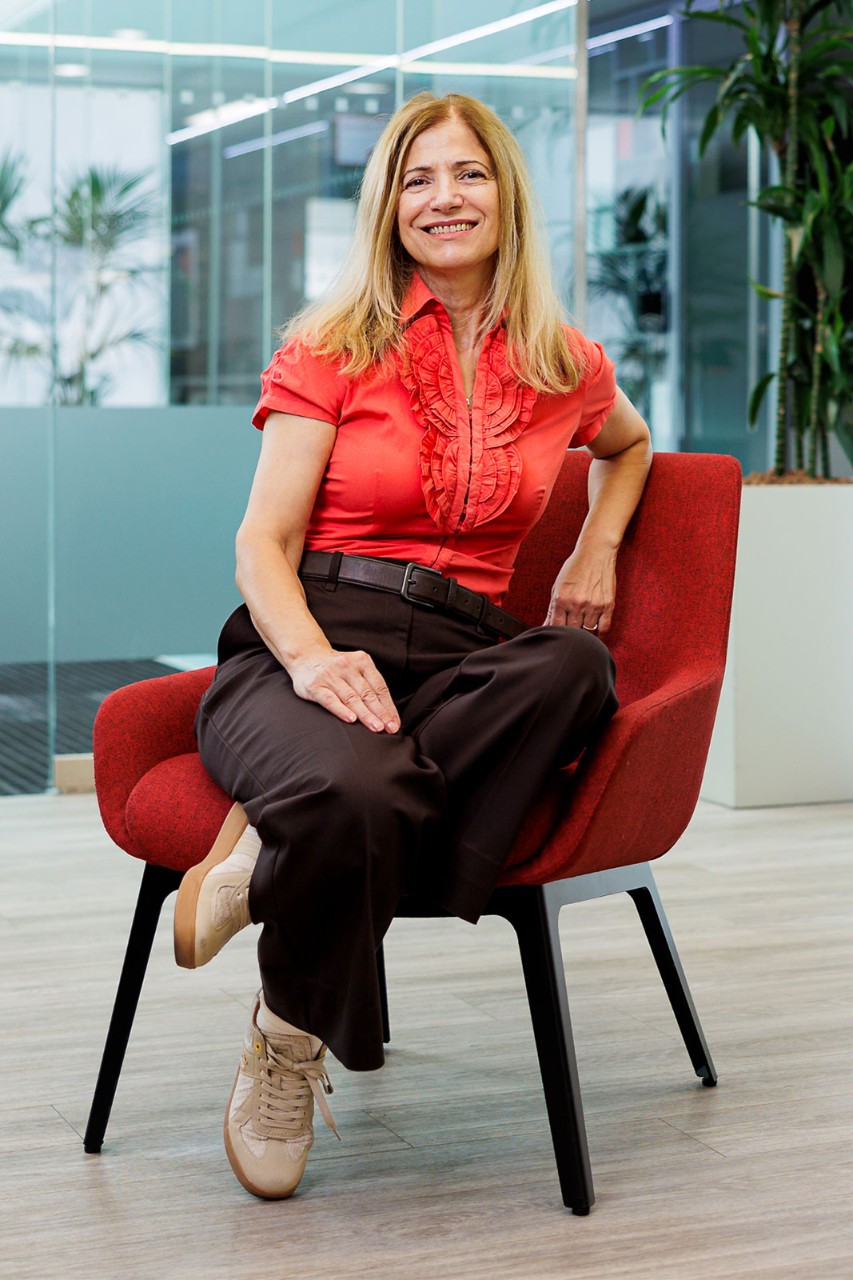
Qualifying with ACCA was a milestone. ‘Becoming an FCCA was confirmation that everything I had built since arriving in London had genuine substance and permanence. ACCA has changed my career and opened the door.’
Her career since then has been defined by finance transformation, often with SMEs. ‘My very first job after qualifying with ACCA was with a family business; they recognised my skills and gave me space. I went full steam ahead and drove the financial transformation. It was a wonderful experience.’
She has thrived on the opportunity to make a difference, but always with an eye on the next challenge. ‘When things start to get a bit repetitive, I tend to move to the next challenge – move on and sort out another business.’
Attention to detail
In 2021 she joined Strabag, an Austrian construction group with almost 90,000 employees across Europe, as finance manager. She was immediately seconded to the Skanska Costain Strabag (SCS) joint venture as financial controller. The joint venture was delivering stage two construction of the HS2 high speed railway between London and the West Midlands.
This was a significant step up in terms of scale for her. ‘It was small when I joined and when I left it was a multibillion-pound project.’
Her attention to detail has led to a reputation for thoroughness. ‘I had only been at SCS joint venture for a couple of months when I identified opportunities for improvement and set about driving those changes.’
‘Systems are complex, and people don’t expect finance people to be that familiar with them. But my view is that the database should be owned by finance because no one is better placed.’
In January 2025, Strabag was part of a consortium that was named preferred bidder for the Harp project; its role is to design and construct the project, followed by 25 years of post-completion maintenance. Shabani joined as head of project finance the following month.
‘The database should be owned by finance – no-one is better placed’
With the project currently in the enabling works stage, Shabani spent the bulk of last year setting the financial foundations for a long-running project that will increase significant in scale. ‘The current small team will become much larger as the project progresses,’ she says.
With Harp’s financial foundations firmly in place, Shabani’s role is concluded and she has embarked on a new phase in her career, focusing on ‘meaningful and satisfying’ fractional CFO work where she can ‘make a real difference to entrepreneurial SMEs’.
Automation
In her future career she will continue to make targeted use of AI, of which she is a strong advocate. ‘Automation will remove the work we shouldn’t have been doing in the first place as qualified accountants,’ she argues. ‘Finance adds value through judgment and challenging assumptions. That’s what earns us a seat at the table.’
But she does see governance as a concern. ‘The hallucinations are real. That’s why professional accountants have to be the architects of AI usage within the finance function. You have to know the answer, and you have to know how to test the answer.’
‘Everyone should lean into AI. Don’t wait for it to force the shift’
ACCA’s Global Talent Trends survey, she points out, shows that while 51% of respondents are worried about the impact of AI on their job, 82% are confident they can develop the skills to work with AI. ‘I am firmly in that camp. I would recommend that everyone leans in. Don’t wait for AI to force the shift.’
She is certainly not leaving it to chance – she embraced AI early on and recently completed an AI bootcamp certification. ‘Strict deadlines and immaculate planning, that’s the key,’ she says. It’s a principle she has applied throughout her career, and it is one that has served her well.
The CV
2021
Joined Strabag as finance manager, immediately seconded as financial controller to HS2 SCS joint venture; 2023 head of project finance, HS2, Strabag; 2025 head of project finance, Harp
2002
Series of financial controller and finance manager roles, London
1989
Finance director, Neraimpex, Kosovo


