With more than 30,000km of coastline, a vast network of inland bodies of water and an enormous spread of exclusive maritime zones, Africa’s blue economy generates nearly US$300bn of business a year and is projected to reach US$405bn by 2030, according to the African Union. Fisheries, shipping, offshore energy, marine biotechnology and coastal tourism are all rapidly expanding elements of the blue economy, as demand for low-carbon solutions and climate resilience increases.
‘The blue economy is attractive to financial institutions because it combines long-term growth, stable returns and strong alignment with sustainability goals,’ says Danny Balluck FCCA, CFO for Mauritius and southern Africa at Standard Chartered. ‘Many of these investments are like traditional infrastructure assets, offering predictable cashflows, long lifespans and portfolio diversification benefits across geographies.’
‘We need to turn Africa’s blue natural capital into a recognised asset class’
Blue capital
Fulfilling this potential requires financing models that blend public, private and philanthropic capital. And while overall investment remains modest, demand is growing.
Karen Sack, executive director at the Ocean Risk and Resilience Action Alliance, says finance and accounting professionals can turn Africa’s ‘blue natural capital’ into a recognised, regenerative asset class on sovereign and corporate balance sheets.
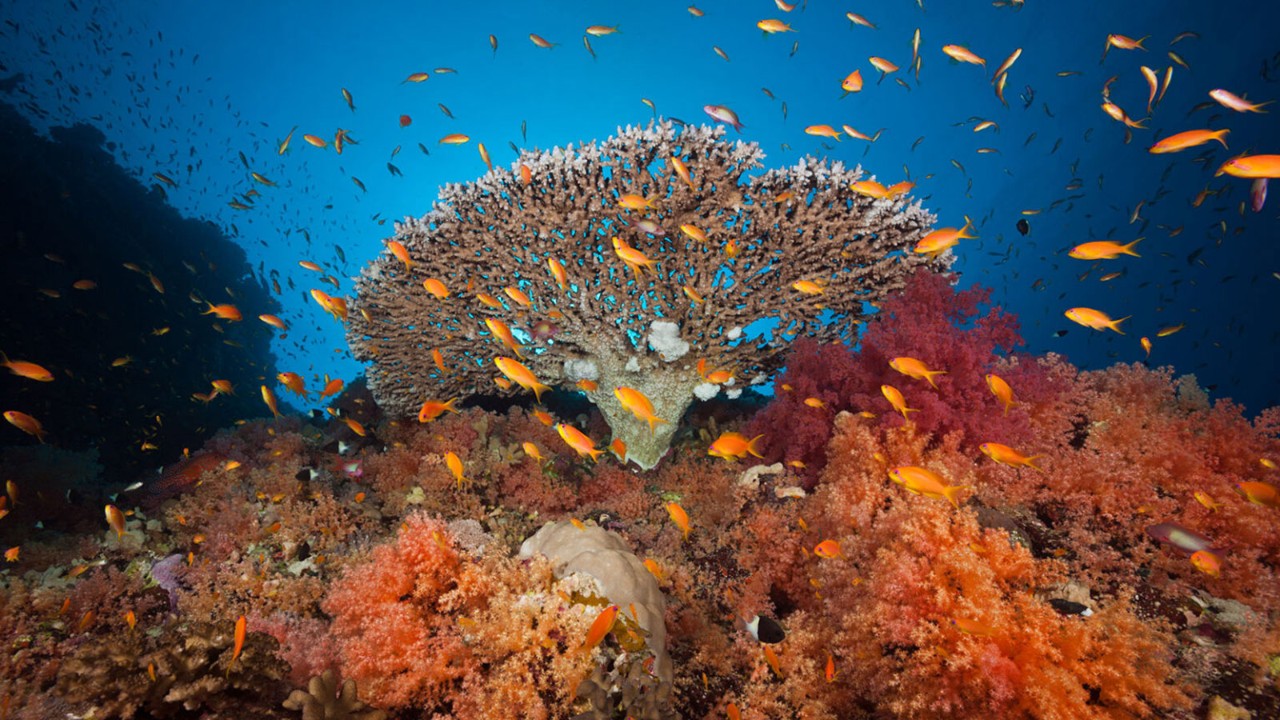
Mangroves, seagrass beds, sand dune ecosystems, coral reefs and kelp forests provide over US$815bn annually in ecosystem services. However, these assets are rapidly disappearing.
‘What we need is financial models and risk reduction strategies that properly account for the value of these ecosystems and the costs of their destruction,’ Sack says, citing blue bonds and debt-for-nature swaps as instruments to provide liquidity without increasing sovereign debt. Seychelles has been a ‘global pioneer’, she adds, on a debt-for-nature swap that has restructured debt in exchange for a commitment to protect 30% of its marine area.
Innovations
Since the Seychelles government in 2018 issued the world’s first sovereign blue bond, these debt instruments for funding sustainable marine activities have attracted broader interest. Yet they remain niche. According to research by Columbia University, there were only 26 blue bond issuances totalling about US$5bn between 2018 and 2022, less than 0.5% of the sustainable debt market.
Another emerging opportunity is blue carbon – carbon credits tied to the sequestration potential of coastal ecosystems such as mangroves and seagrasses. Terraformation’s Keta Lagoon initiative in Ghana is one of the pioneers, with its first credits selling at around US$50 per tonne, well above typical forest credits.
‘Wealth may be transferred from developing states to intermediaries’
‘Innovative sovereign and blended finance mechanisms are critical,’ says Dorothy Maseke, head of the African Natural Capital Alliance secretariat at FSD Africa. ‘Debt-for-nature swaps and blue bonds, as seen in countries like Seychelles and Gabon, show how African nations can strategically leverage natural capital to expand marine protection while strengthening fiscal space.’
However, for Senija Causevic, professor of marketing at Rabat Business School in Morocco, it is also important to ‘give a critical spin on ESG and the so-called blue bonds initiative’. She says: ‘While institutions like the World Bank promote blue bonds as innovative solutions for the climate gap, critical scholars argue that these instruments represent the financialisation of nature.’
Causevic, whose current research focuses on port cities, coastal communities and the sustainable blue economy, says analysis of the Seychelles pilot suggests that ‘high transaction costs and reliance on commercial debt may ultimately transfer wealth from developing African states to global financial intermediaries, rather than supporting local coastal communities’.
The CFO’s task
Such innovations require careful valuation modelling, revenue sharing frameworks and transparent, verifiable reporting structures. For accountants, blue bonds require establishing clear metrics, monitoring the use of proceeds and ensuring credible impact reporting.
Balluck says CFOs leading financial institutions or corporates need ‘a strong knowledge of sustainable finance instruments and a deep understanding about the mechanisms of such instruments’. Advanced financial modelling skills are also critical, as many blue economy projects are long term and capital-intensive.
‘Strong data and analytical capabilities are necessary’
‘CFOs must conduct scenario analysis, assess transition and stranded asset risks, and integrate environmental considerations into enterprise risk management systems,’ he says. ‘Strong data and analytical capabilities are necessary to link financial performance with environmental and social impact metrics, particularly given data gaps in ocean-related sectors.’
More broadly, given ‘fragmented regulation, limited data and evolving sustainability standards’, the financing of blue investments presents significant governance and reporting challenges, he adds. One of the biggest is the lack of standard definitions and taxonomies for what qualifies as ‘sustainable’ in the blue economy. Although guidance from the UN and the EU is emerging, global standards remain fragmented, increasing the risk of ‘bluewashing’ and inconsistent reporting, and data gaps further complicate investment decisions.
‘Measuring impacts on marine biodiversity, fish stocks and blue carbon ecosystems is technically difficult and often lacks reliable baseline data,’ Balluck says. ‘The CFO needs to ensure blue economy objectives are integrated into investment appraisal processes, internal controls and enterprise risk management frameworks.’
Living capital
Sack urges organisations in Africa to integrate ocean risk into their financial planning and capital allocation by transitioning from an extractive ‘business as usual’ model to regenerative operations that treat the ocean as living capital. ‘This integration requires a systemic shift in how nature-related dependencies and risks are valued and reported,’ she says.
Importantly, the Taskforce on Nature-related Financial Disclosures (TNFD) is shifting nature from a sustainability add-on to a core financial risk and strategy issue. Its ‘locate, evaluate, assess, prepare’ framework lets companies map their ecosystem impact and dependence and translate it into financial risk and opportunity.
‘Accountants can turn biodiversity from narrative into numbers’
‘TNFD helps firms better understand physical risks – from declining fish stocks to coastal erosion – and identify new value pools in regenerative aquaculture, blue carbon and nature-linked insurance,’ Maseke says.
Accountants are central to making TNFD credible and useful for decision-making. ‘By applying double materiality and embedding nature-related risks into balance sheets, risk registers and capital allocation decisions, accountants turn biodiversity from narrative into numbers,’ she adds.


