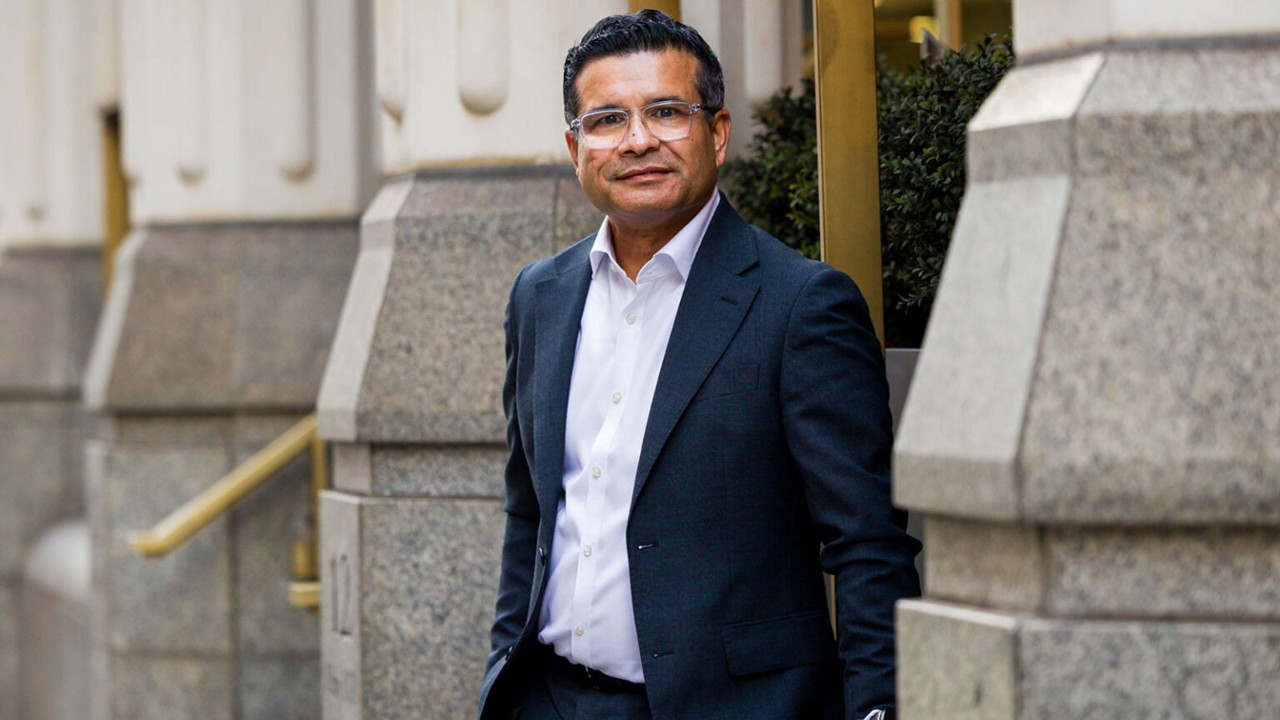
When Saroj Sapkota talks about his career, the journey feels as much philosophical as professional. ‘In a developing country like Nepal, career paths are not necessarily by conscious choice,’ he says. ‘It’s about recognising rare opportunities, seizing them, and committing fully.’
That mindset has carried him from a first job at the Central Bank of Nepal to becoming a partner at AGK Partners, a UK-based firm advising entrepreneurs and investors on complex tax, structuring and reporting issues. Along the way he’s picked up ACCA gold-medallist honours, built a thriving Nepal-based delivery platform for AGK, and become a vocal advocate for high-quality professional training in his home country.
‘I thought, if I want to seriously pursue this qualification, I have to go to the UK’
Sapkota first encountered ACCA while working at Nepal’s Central Bank and completing a master’s degree. At the time, study resources in the country were scarce. ‘There was very limited material available – we’re talking about 26 years ago,’ he recalls. His first exam attempt, which was highly-scored, was memorable: ‘I finished one paper in an hour and 15 minutes and had nothing else to write. I thought, if I want to seriously pursue this qualification, I have to go to the UK.’
Aptitude for tax
He arrived in London in 2000, sponsored by relatives, and quickly proved his instincts right. Working part-time in a small accountancy firm, he completed his ACCA qualification in 2001 and was soon identified for his aptitude in tax. Within months, his employer offered to sponsor him through the Chartered Tax Adviser qualification. ‘That gave me the foundation for everything in the future,’ he says. ‘The habit of research, of seeking external advice, of looking for evidence – that’s what shaped how I think.’
By 2007, Sapkota was a partner at a North London practice, having been on a fast-track partnership route with the firm. The early years were shaped by mergers and de-mergers, and by his determination to build a firm that combined deep technical skill with entrepreneurial flexibility. That vision eventually became AGK Partners, established in 2016 with two fellow partners.
Today, AGK Partners’ story is one of steady, sustained growth. The firm’s UK team of around 45 professionals works closely with a 95-strong Nepal team – a model that has driven around 15% annual growth since 2015.
What makes it distinctive, Sapkota insists, is its structure. ‘We don’t use the word “outsourcing”,’ he says. ‘Nepal is simply another office – just as we have two offices in North London. Everyone works on the same systems, the same standards, the same accountability.’
‘By helping to train people, we’re assisting in the growth of the industry itself’
That integrated model, he argues, is what enables AGK to deliver both scale and sophistication. The Nepal team handles not just processing work, but complex tax computations, IFRS reporting and advisory projects. ‘It’s not about sending low-level tasks offshore,’ Sapkota explains. ‘It’s about building complete functions – with technical capability, independence and responsibility.’
Rethinking ‘outsourcing’
Sapkota’s frustration with the term is clear. ‘There’s a dogma associated with outsourcing,’ he says. ‘People assume you go offshore because it’s cheaper. Of course, the cost base in Nepal is different – but that’s not the driver. The driver is capability and opportunity.’
‘Some of the technically complex work we do, you’d rarely find outside the top 20 firms’
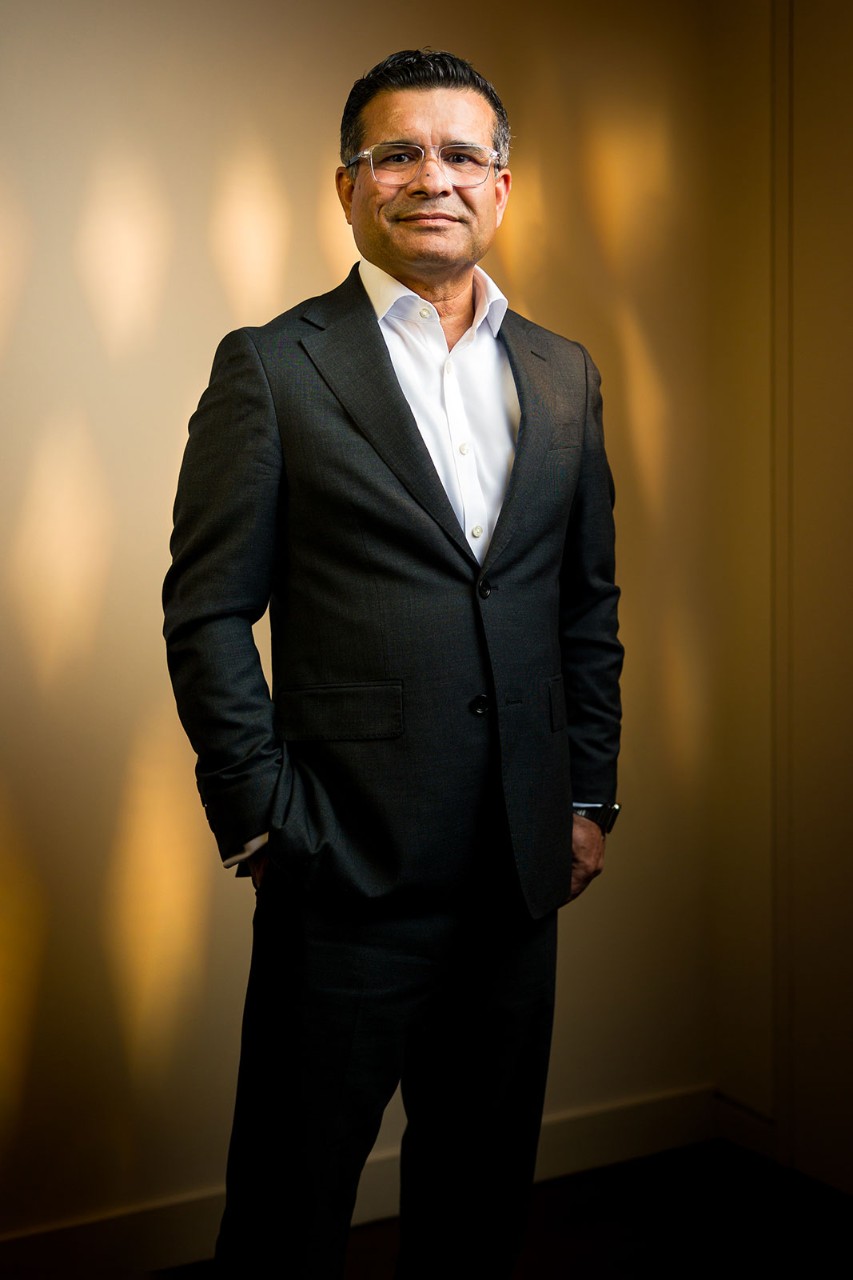
In the UK, he notes, the accountancy profession is no longer a top career choice for many young people, making it difficult for firms to recruit at all levels. In Nepal, by contrast, accounting still carries prestige. ‘That means we have access to highly motivated, capable people who see this as a profession of status and purpose,’ he says.
This combination – a strong talent pool and a genuinely integrated firm structure – has allowed AGK to grow rapidly while maintaining quality. ‘Some of the technically complex work we do, you’d rarely find outside the top 20 firms,’ he says.
Nepal’s future talent
Sapkota’s commitment to training the next generation of accountants in Nepal is evident. AGK has invested directly in an ACCA learning provider in Kathmandu and offers scholarships to students. Yet he’s careful not to frame this as charity.
‘I’m always reluctant to make a claim that it comes from pure altruism,’ he says. ‘It’s driven by business need. Any benefit that comes to society is a by-product of doing business the right way.’
That pragmatic philosophy reflects his belief that long-term success and social benefit can align naturally. ‘Nobody should be expected to do something for society just for its own sake,’ he explains. ‘If you understand your own interests properly – today, tomorrow, 20 years from now – you’ll often make decisions that help both you and the wider community.’
‘Employers are starting to recognise the extra capability that ACCA brings’
For AGK, investing in education also makes strategic sense. ‘If we want to grow, there has to be an industry here,’ Sapkota says. ‘By helping to train people, we’re assisting in the growth of the industry itself. Everyone benefits from that.’
Tapping Nepal’s potential
Sapkota sees huge potential for the accounting profession in Nepal. He points to India’s booming professional services sector as a glimpse of what could come. ‘We’re likely to follow a similar trajectory,’ he predicts. ‘We’re nearly there – it just needs a few big businesses to make decisions and there will be a chain effect.’
He’s also encouraged by ACCA’s growing presence in the country. ‘When we started, the infrastructure wasn’t there,’ he says. ‘But over time, ACCA’s representative office in Nepal has become very active and supportive. Employers are starting to recognise the extra capability that ACCA brings.’
‘When I’m free, I just do what I feel like at that moment’
Outside work, he resists structure. ‘Unlike my professional life, I don’t like rules or organisation,’ he laughs. ‘When I’m free, I just do what I feel like at that moment – travel, read, go hiking.’
His reading list, though, hints at a restless intellect, including works such as Thinking, Fast and Slow, The Alignment Problem and The Logic of Scientific Discovery. ‘They remind me that the world doesn’t function in rigid frameworks,’ he says. ‘To lead and advise well, you need to understand people and how they make decisions.’


