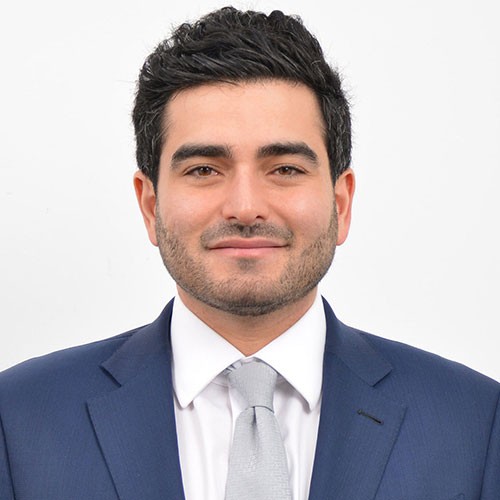
My inspiration came from my father Sherin Noureldin, who founded Moore Egypt in 1989. I witnessed the responsibility and trust placed in a professional accountant, and that sense of duty deeply influenced my career choice. I began my career as an intern at Moore Egypt immediately after high school.
I found working and studying abroad hugely rewarding. After graduating, I worked at an accountancy firm in Sydney, Australia, while lecturing in accounting and business at a college. I also had a two-year secondment with Moore Stephens in the UK, where I worked across audit and corporate finance and completed an MSc in professional accountancy at UCL.
When you’re a partner, your firm becomes your most important client
Audit consistently pushes you beyond your comfort zone. As auditors we must challenge management, navigate complex technical issues and sometimes hold firm positions in the face of commercial pressure. Navigating complex technical issues while convincing reluctant clients to apply accounting standards correctly needs both resilience and confidence.
Your primary responsibility shifts when you become a partner. Your largest and most important client becomes the firm itself. Beyond technical delivery, you are responsible for culture, talent development and long-term sustainability. Leadership at this level is less about individual output and more about enabling others to succeed. It is our duty as partners to ensure that our people are properly trained, and given the tools and environment they need to perform at their best.
‘Good auditors find issues; great auditors understand them.’ It’s one of my favourite sayings, along with ‘Reputation takes decades to build and one file to lose.’
What I enjoy most about my job is helping clients solve complex problems. I find great satisfaction in helping businesses navigate critical decisions. I also value the broader public interest of accounting. Auditors act as guardians of transparency, ensuring that stakeholders can rely on financial information with confidence.
Attracting and retaining talent is one of the main challenges for Egyptian businesses. The depreciation of the Egyptian pound has made overseas opportunities more appealing, and many foreign businesses are offshoring support functions to Egypt, which is increasing competition for skilled professionals. Access to financing is another major challenge, with high interest rates and the increasing cost of capital making long-term investment decisions more difficult.
As auditors we must sometimes hold firm positions in the face of commercial pressure
There are, though, strong opportunities in export-driven sectors. That is particularly the case where costs are largely in Egyptian pounds and revenues in foreign currency. Agriculture and tourism are prime examples, as both sectors are currently experiencing strong momentum due to Egypt’s low costs and strategic geographical position.
Digitisation of Egypt’s regulatory procedures would help improve our business environment. A prime candidate for full digitisation is the General Authority for Investment and Free Zones (GAFI), whose procedures cover everything from capital increases and share transfers to articles of association and registry updates. Legally binding e-signatures, for example, would enhance efficiency and investor confidence without weakening governance. The current system is paper-based and means processing times are unpredictable, which reduces certainty and weakens Egypt’s competitiveness.
If I weren’t an accountant, I would have pursued a career in investment banking. The analytical rigour, transaction-driven environment and strategic decision-making closely align with my interests in finance and advisory work.
I enjoy golfing and playing tennis in my spare time. I also value spending time with my friends, which provides balance between my professional and personal life.


