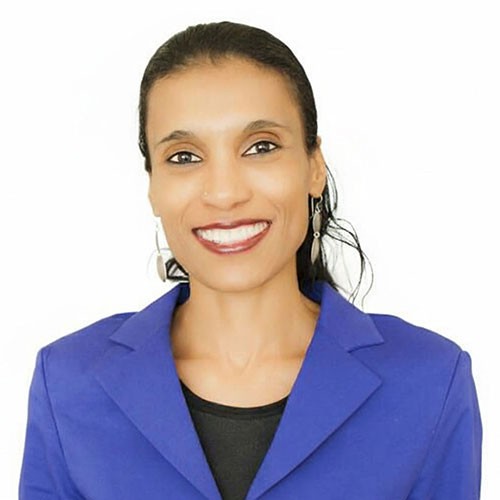
I was always drawn to numbers and grew up in a family that closely followed the news, particularly economic and financial developments, which played a significant role in shaping my career interests. I started working in accounting during my school holidays, as a part-time bookkeeper at an accounting firm, which reinforced my interest.
I’ve travelled a lot during my career. After graduating from university in Lisbon, Portugal and completing my first master’s degree at Manchester University in the UK, I moved to Mozambique, where I worked as a financial and business consultant and later for Standard Bank, where I managed a portfolio of blue-chip clients including SABMiller, Grinaker-LTA and Shell. I met my husband, a British pilot, while in Africa and we moved to the UK in 2003.
I realised that my opportunities were limited without a professional qualification
ACCA has broadened my options. When I was in the UK, I wanted to pursue a career in finance and enrolled for an MBA, but I realised that my opportunities were limited without a professional qualification, so I opted to study with ACCA. When we had to relocate again because my husband was offered a job in Vietnam, the move unfortunately coincided with the global financial crisis but I was able to secure a position as an accounting lecturer at the Royal Melbourne Institute of Technology in Ho Chi Minh City.
Moving to Vietnam was definitely outside my comfort zone. Having spent most of my life in Europe, I encountered significant cultural differences, including the language barrier, and differing social norms and practices that I had to adapt to.
The language barrier is a big challenge for the higher education sector in Oman. A large proportion of students complete their school education in Arabic but must then take degrees taught in English.
I have concerns about the increasing use of AI. Many students now rely on AI tools to produce their assignments rather than engaging in independent research and critical thinking, which hinders their learning and development.
Muscat University is capitalising on significant opportunities available in Oman. Since 2025, professionals working in accounting and finance are required to have a recognised professional certification to be eligible for a work permit. This has strengthened the appeal of the university’s accounting and finance programmes.
It’s important that professional bodies and universities work together
It’s important that professional bodies and universities work together. We have aligned our programmes with professional bodies such as ACCA, which makes the university highly attractive to both students and those already working in finance. One of my most significant achievements was working on the successful attainment of ACCA accreditation at the university, which resulted in nine ACCA exemptions for the BSc in accounting and finance.
This is my favourite saying: ‘Treat others how you would want to be treated.’
I have always been interested in development economics. I would have pursued a career in economics if I wasn’t in finance. One of the things I would introduce if I had the power is to require oil and mining companies operating in emerging economies countries to directly contribute to sustainable development, including social infrastructure, such as schools and hospitals, and long-term support for teachers and doctors.
Interacting with the younger generation is the best part of my job. It helps me stay intellectually engaged and energetic. I’m proud to be contributing meaningfully to the development of future Omani finance professionals.
Quiet, thoughtful moments help me relax. In my own time I love taking long walks along the beach, sharing meaningful time with friends and expressing my creativity by designing my own wardrobe.

