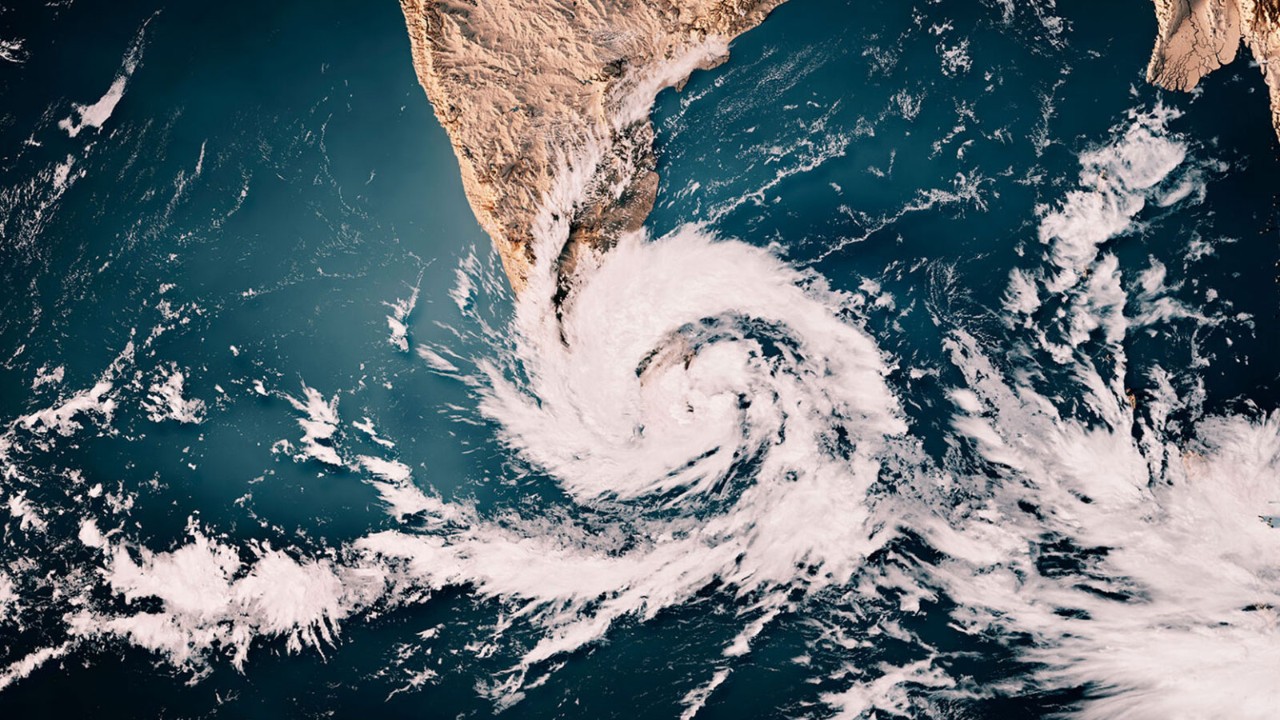
Cyclone Ditwah, which hit Sri Lanka last November, has pushed the country’s climate vulnerability into the centre of its fiscal debate. The storm and subsequent floods triggered damage across all 25 districts, but the more lasting pressure has been on public finances already constrained by debt restructuring and fiscal consolidation.
Early estimates by the World Bank place direct physical damage at US$4.1bn, equivalent to about 4% of GDP. Infrastructure accounts for the largest share of damage at US$1.735bn, followed by residential buildings and household assets at US$985m and agriculture at US$814m. The Central Province was the worst affected, with damage in Kandy district alone estimated at US$689m.
‘Public financing for disaster response remains largely reactive and short term’
The country’s response has relied on emergency reallocations, Treasury-managed relief spending and post-disaster support from development partners. These mechanisms have allowed the state to respond, but they have also exposed the limits of a climate financing model built around adjustment instead of anticipation.
After the event
Sri Lanka’s disaster response is financed primarily through post-event fiscal adjustment. Immediate liquidity is generated through reallocations within line ministry budgets.
‘Sri Lanka’s response to recent floods and cyclone-related impacts has relied primarily on a combination of national budget reallocations, contingency financing, disaster relief funds, and post-disaster support coordinated through institutions such as the Disaster Management Centre and relevant line ministries,’ says Gina Maswabi, Commonwealth national climate finance adviser in Sri Lanka.
While the framework allows the government to mobilise resources quickly, its weakness lies in how financing is sourced, often by diverting resources from planned development expenditure.
According to Maswabi, ‘Public financing for disaster response remains largely reactive and short term, with limited pre-arranged risk financing instruments or dedicated buffers for climate shocks.’
‘Emergency spending creates trade-offs between short-term relief and long-term stability’
Climate-related expenditure appears across sectoral budgets covering infrastructure, agriculture and renewable energy, but allocations remain small relative to exposure. Suresh Perera, principal of the tax and regulatory division at KPMG in Sri Lanka, estimates annual climate-related spending at around 0.5% of GDP, with a relatively modest allocation set aside for disaster relief. In the case of Cyclone Ditwah, recovery expenditure widened the 2026 budget deficit to 6.5% of GDP from 5.1% and reduced the primary surplus to 1% from 2.5%. ‘Emergency climate spending creates trade-offs between short-term relief and long-term stability,’ Perera says.
Climate finance limits
Debt distress places additional constraints on Sri Lanka’s ability to finance climate shocks. Maswabi says that Sri Lanka’s debt-distressed status ‘significantly constrains its ability to access timely and flexible climate finance’, noting that most climate funds are not designed for rapid disbursement.
The structure of international climate finance reinforces this constraint. ‘International climate funds are structured around medium- to long-term projects and involve lengthy approval processes, which are not well suited to rapid-onset disasters,’ Maswabi says. As a result, Sri Lanka often relies on ad hoc grants, humanitarian assistance and budgetary adjustments rather than predictable, rules-based financing mechanisms.
‘The primary weakness is that funding is heavily siloed’
The reactive nature of financing also exposes operational weaknesses. ‘The primary weakness is that funding is heavily siloed,’ says environmental journalist Arul Karki, describing a ‘reactionary gap’ exposed by Cyclone Ditwah. Immediate liquidity was available for food and medical relief, but financing for rebuilding schools, bridges, housing and local infrastructure moved slowly.
Karki also notes that Cyclone Ditwah revealed technical and linguistic shortcomings in early-warning systems, particularly affecting marginalised communities in the Hill Country. Financial allocations, in his assessment, have not translated into localised, life-saving infrastructure or communication systems.
Timing mismatch
This timing mismatch is not unique to Sri Lanka, however. Jayantha Wijesinghe, a climate change and sustainability consultant and Co-Founder of Rainforest Protectors of Sri Lanka, says that global climate finance frameworks are overwhelmingly designed for planned, long-term investments.
Sri Lanka relies on a mix of annual budget allocations, post-disaster reallocations, external concessional loans and grant-based project finance accessed through multilateral development banks, UN agencies, and bilateral donors. ‘This approach is slow and insufficient because it depends on approval-heavy, project-driven systems that are not designed for rapid liquidity,’ Wijesinghe says.
The right direction?
The National Climate Finance Strategy (2025-2030) aims to integrate climate priorities into fiscal planning and broaden financing beyond the national budget. Developed with support from the United Nations Development Programme and the UK government, the strategy identifies 12 financial instruments intended to mobilise domestic and international investment.
Speaking at the launch in October, Treasury Secretary Dr. Harshana Suriyapperuma acknowledged the constraints. ‘These actions require financing. They require planning and coordinated efforts. As the Government, with limited resources at disposal, we won’t be able to combat it alone,’ he said.
Implementation remains at an early stage. Climate budget tagging has begun, but disasters continue to be treated largely as exceptional expenditures. Wijesinghe notes that many climate finance instruments remain debt-creating, increasing conditionality and delaying approvals, with financial risk often outweighing climate vulnerability in decision-making.
As Sri Lanka continues to manage climate shocks through improvisation rather than pre-arranged financing, the strain Ditwah placed on deficits, debt negotiations and growth projections suggests how limited that space has become as climate events grow larger and more frequent.


