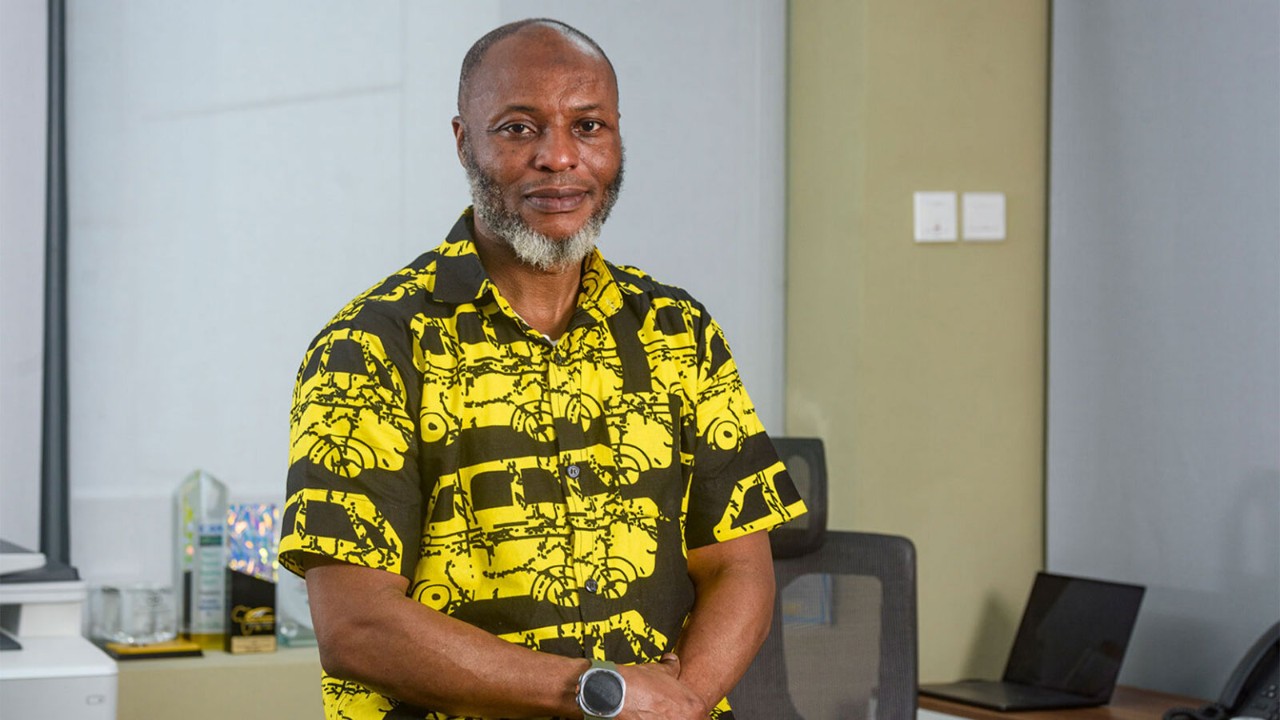
The role of CFO is always consequential, but some are more consequential than others. For Modupe Kadri FCCA, CFO of the telecoms giant MTN Nigeria, his position comes with the knowledge that a financial misstep could impact the national economy.
‘Telecommunications has become one of the important pillars of Nigeria’s economy, contributing approximately 9.7% of real GDP in the second quarter of 2026, based on the rebased GDP series. MTN Nigeria is one of the country’s largest telecommunications operators, and our responsibility extends well beyond the company.
‘Our infrastructure enables economic activity across banking, commerce, education, healthcare and other sectors. Decisions we make about investment, network quality and financial sustainability can therefore have significant implications for the wider economy.’
MTN Group, established in 1994 in South Africa, operates across 19 markets in Africa and the Middle East. It serves 323 million customers. The Group reported annual revenue of R226.7bn (US$13.35bn) for 2025.
‘We were never shy to invest if it made business sense’
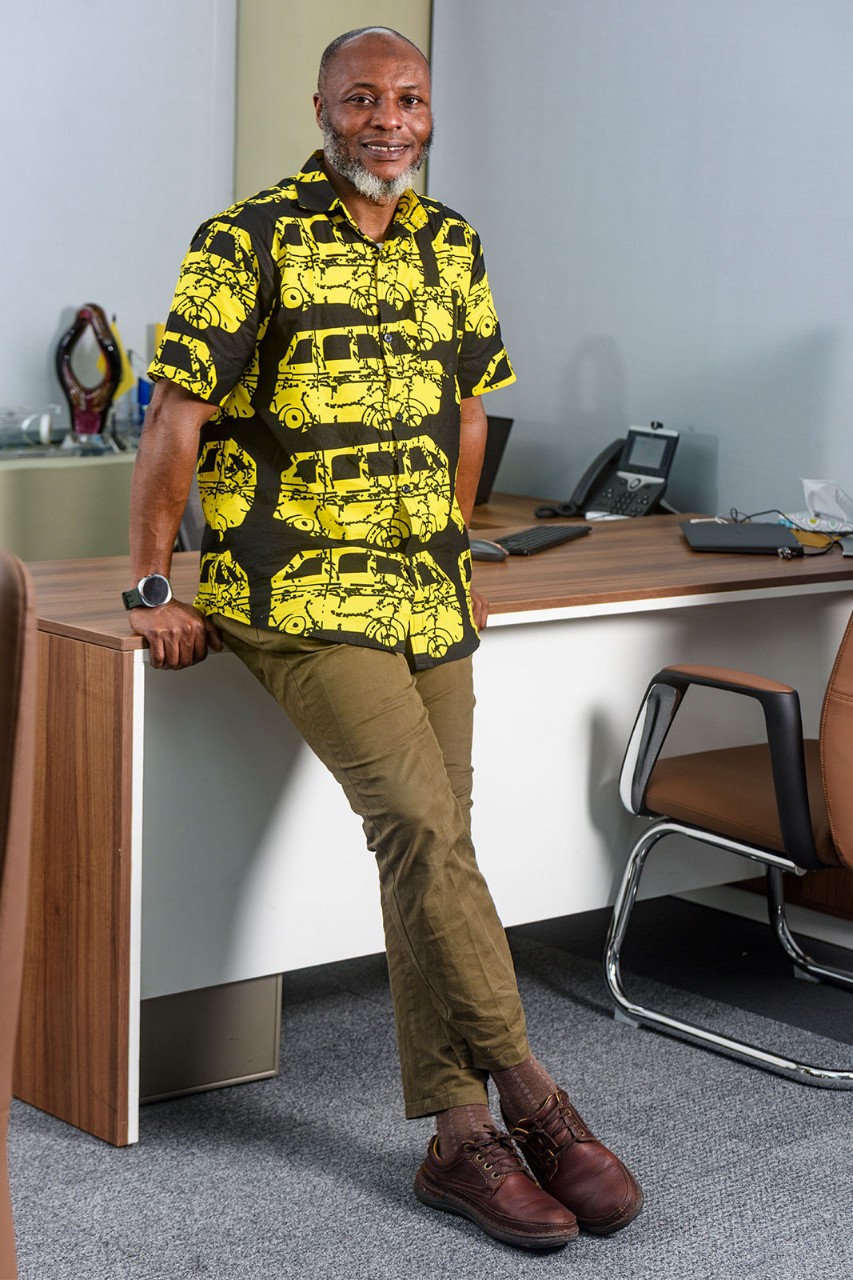
MTN Nigeria is the Group’s largest market by subscribers and a major contributor to its earnings. As of September 2026, the company served approximately 94.7 million subscribers, while its contribution to Group revenue was approximately 30% in the first half of 2026.
Nigeria can also claim to be the catalyst for MTN Group’s phenomenal growth, after a decision was made in 2001 to bid for the country’s first digital GSM/2G licences at a time when Nigeria was seen as too economically volatile by many international investors.
Towards inclusive growth
Since then, MTN Nigeria has played an instrumental role in the development of the country’s telecoms industry, and now in its digital future, by providing the connectivity that encourages inclusive growth.
Kadri joined MTN Nigeria in 2007, when its focus was on rolling out telecoms infrastructure and services across the country. The secret of its success in an extraordinarily competitive market, he says, is that it has always looked for value – but has pursued it with rigorous financial discipline.
CV
2020
CFO, MTN Nigeria
2014
CFO, Scancom (MTN Ghana)
2007
General manager, financial operations, MTN Nigeria
2005
Financial controller, then business development manager, West African Portland Cement
1988
Coopers & Lybrand
In 2001 it was obvious to the group that Nigeria’s young and rapidly expanding population would benefit from mobile phone coverage. But MTN Nigeria’s financial strength made it a less risky proposition than it was for competitors. ‘MTN had a strong balance sheet and was generating a lot of cash – money that it invested back into the business,’ Kadri explains. ‘It didn’t have the capex restrictions that other companies had. It didn’t need to borrow to invest.’
‘We were never shy to invest if it made business sense,’ he adds. That same ethos drives the company today. ‘Capital is allocated with stringent criteria. There must be a return on the investment that meets certain thresholds, or we won’t do it.’
That early expansion across Nigeria meant that coverage is one of MTN’s main strengths. ‘Nigeria is a multi-SIM market but, for most people, MTN has remained their primary SIM. They know that they can travel across the country and will still have coverage.’
Confidence driven
As it celebrates 25 years of operations, MTN Nigeria has notched up a collection of firsts in the country’s telecommunications development. ‘MTN Nigeria was among the pioneers of the GSM revolution, making the first GSM call following the historic 2001 licence auction,’ Kadri.
‘Over the years, we have continued investing in successive generations of technology, from 2G and 3G through to 4G and the pioneering launch of commercial 5G services, while building one of the country’s most extensive fibre and digital infrastructure networks.
‘That was driven by the confidence that we had crunched the numbers and the investment made sense.’
‘We operate in a very, very, very, very volatile macroeconomic situation’
The company’s balance sheet was so strong in 2021 that it was able to pay US$275m for its 5G licence with cash. But when capital has been needed for investment, responsibility for raising it lies at local rather than group level, on the basis that local expertise and experience is invaluable. ‘My net finance costs are well below the industry average rate,’ says Kadri. It’s no accident that the company is triple-A rated by credit-rating agencies Agusto & Co and GCR.
Even the most disciplined financial management, though, can be derailed by geopolitics. ‘We operate in a very, very, very, very volatile macroeconomic situation,’ says Kadri. ‘In 2023, for instance, everything was going smoothly and then we had elections and a new government, and boom: fireworks.’
Crisis conditions
From 2023, a range of reforms aimed at long-standing structural imbalances triggered significant economic adjustment. The loosening of currency controls led to the naira falling in value against the US dollar from 460 to more than 1,600 – one of the largest currency adjustments seen anywhere for years – while the lifting of energy subsidies sent prices and inflation soaring to an annual rate of 33.2% in 2024 before falling back to 23% in 2025.
The upheaval left MTN Nigeria fighting to rebuild its balance sheet. Leasing contracts were partially pegged to the US dollar, which meant that right-of-use liabilities skyrocketed, creating huge losses. The company was pushed into a negative equity position; retained earnings were wiped out, financial covenants were breached and dividends suspended.
‘Once people see you are making the right calls, it becomes part and parcel of the fabric’
Guiding the company through the crisis demanded financial discipline, including cost cutting and the renegotiation of leases. ‘A priority was reducing the amount of forex volatility,’ says Kadri, and the decision was made to pay off its foreign loans. ‘It’s important to face the hard facts. Once people see you are making the right calls, it becomes part and parcel of the fabric of the organisation.’
The financial turnaround has defied predictions. After two years of losses, revenue rose to ₦5.2trn in 2025, up almost 55% on 2024, and EBITDA increased by more than 108%. In the first half of 2026 the company invested more than ₦620bn in network infrastructure, excluding leases, alongside a separate $120m in the first phase of the Dabengwa Data Centre, marking its evolution from a pure telecoms operator to an integrated digital solutions company.
MTN Nigeria
₦5.2trn (US$3.9bn)
Total revenue in 2025
54.9%
Year-on-year revenue growth in 2025
53.2 million
Number of data subscribers in 2025
126.2%
Year-on-year increase in capital expenditure, excluding leases, in 2025
4.2 million
Number of home broadband subscribers in 2025 – up 31.3% on 2024
The business is powering again; demand for high-quality connectivity is high, the population is young and the economy growing. Tellingly, an average subscriber used 20% more data in 2025 than in 2024, reflecting the way that digital services are being embedded into Nigerian daily life.
The experience has reinforced Kadri’s belief in financial discipline coupled with informed investment – and that protecting the balance sheet alone will not create value.
‘At the back of my mind, I’m always worried that there could be a repeat of the 2024 crisis,’ he says. ‘My job is to make sure that doesn’t happen – and that can come down to my ability to read what’s likely to happen and focus on the things that are within our control.’
‘Government policy can change. You can make a forecast based on certain parameters and then there’s a shift. I’m always scanning the environment to make sure we remain competitive and are able to provide the service that Nigerians want.’


