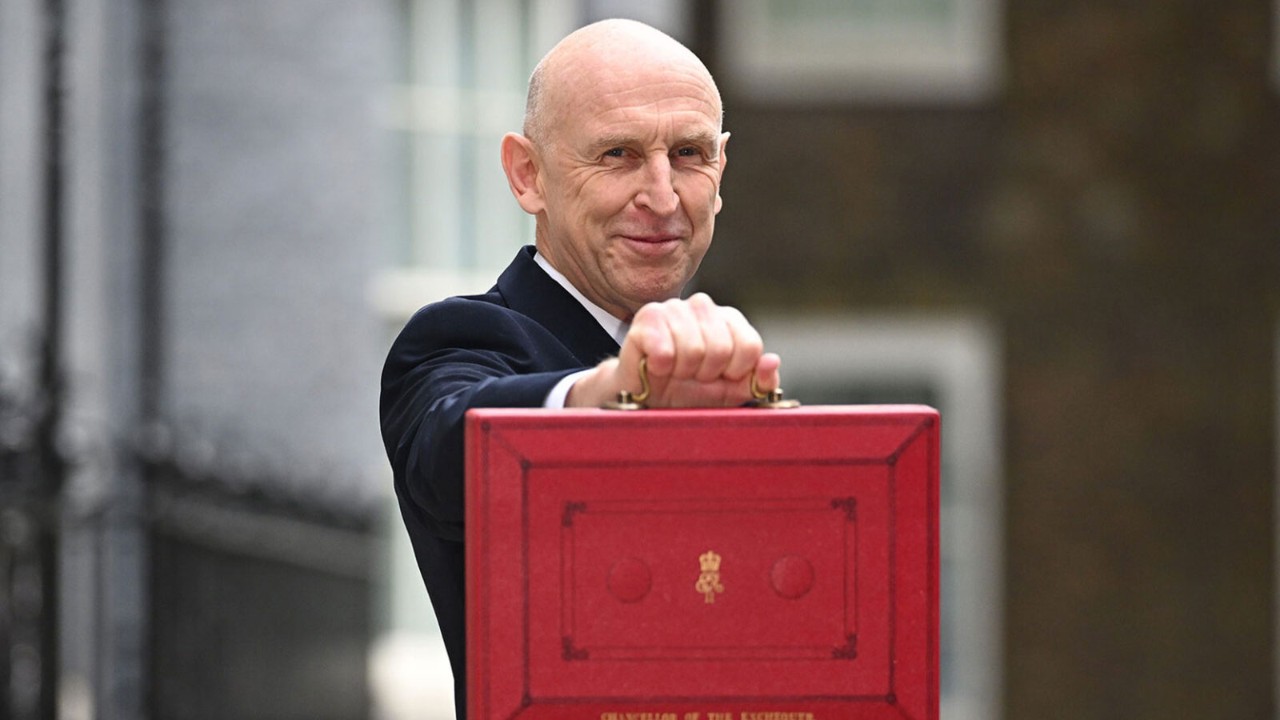
The Autumn Budget has been one of most eventful and consequential ever for the world of indirect taxes – from the e-invoicing revolution to the brand-new sets of VAT rules for online marketplace sales and overseas service providers with unregistered business customers.
The publication of a detailed roadmap for the introduction of the UK e-invoicing regime, which will apply to VAT invoices from 1 April 2029, was the most anticipated Budget document among the indirect tax community and it did not disappoint.
Beyond the publication of the future key milestones from now to the go-live date, there are four features of the new regime that the roadmap document makes clear and it is worth paying particular attention to:
- PDF files, word-processed documents, image files such as jpegs and HTML invoices on a webpage, as well as emails and images sent via fax machine, will not count as e-invoices.
- Invoices for B2C supplies will be outside the scope, as they do not ordinarily require the issue of valid VAT invoices.
- Instances of non-compliance are likely to be dealt with by HMRC using the existing VAT invoicing penalties framework.
- The rules are expected to be the same for all UK VAT-registered traders, with no exceptions for small or micro businesses.
On the last point, the roadmap document simply states that ‘If you or your organisation are VAT registered, you will be required to issue VAT invoices as e-invoices, or if you need to receive formal VAT invoices for any other reason, you will need to consider how you will receive e-invoices’. There is not even a hint of possible delayed implementation of the new rules for certain categories of business.
The new UK e-invoicing regime may be the first step towards a digital reporting system
As for the establishment of a common set of standards, operating rules and network arrangements, HMRC confirmed that PEPPOL (Pan-European Public Procurement Online) is the core interoperability framework for e-invoicing. This should enable ‘organisations using different software providers to exchange e-invoices securely and consistently through certified Access Points’.
In terms of next steps, the key dates to note are:
- Spring 2027: the government will start a consultation on the specific e-invoicing standards.
- October 2027 (at the earliest): any final e-invoicing requirements will be confirmed.
- April 2029: the UK e-invoicing regime will go live.
The new UK e-invoicing regime may be the first step towards the launch of a digital reporting system, which already exists in other countries (see the AB article, ‘The many faces of digital taxation’). However, no decisions have yet been taken on whether an e-invoicing digital reporting will be introduced in the UK, too.
Online vendors
The e-invoicing revolution is expected to affect all businesses, whereas other legislative changes announced at the Budget were sector-specific, albeit equally transformative for the parties affected.
The new VAT framework for online marketplace sales is a case in point. From October 2027, the VAT online marketplace liability rules, which already exist for non-UK businesses’ sales (whereby the online marketplaces are responsible for collecting any VAT due), will be extended to UK businesses that are VAT registered or that make sales of more than £90,000 on an individual online marketplace.
The online marketplace will be liable to account for VAT on any sales
The online marketplace will therefore be liable to account for VAT on any sales in scope made by any seller, regardless of whether it is established in the UK or not.
The aim of the government here is to minimise the risk of VAT fraud and – in the words of the Treasury – to ‘support fair competition by helping ensure businesses that pay the tax they owe are not undercut by those that don’t’.
However, the new rules will not apply to sales of second-hand goods, personal sales (for example, where individuals occasionally sell their own clothes or other personal belongings) or to businesses selling goods to other businesses.
Non-UK established businesses, which have been subject to the online marketplace VAT rules for a few years already, must familiarise themselves with another set of new rules: the restriction to the application of the VAT reverse charge on sales of services to UK businesses that are non-VAT registered.
The CBAM will place a carbon price on the emissions embodied in imports of specified goods
From April 2027, the reverse charge on services supplied from overseas will be applied only by those UK businesses that are already VAT registered. This will in turn cause any overseas supplier dealing with UK businesses that do not have a UK VAT registration number to register, charge and account for UK VAT themselves.
It remains to be seen if this change will deter overseas service providers in the B2B space to supply non-VAT registered customers going forward.
Environmental
The Budget also contained some important, non-VAT-related indirect tax announcements.
One concerns the Climate Change Levy (CCL), the main environmental tax charged on certain levels of consumption of commodities like gas, electricity and liquified petroleum gas (LPG) by businesses.
The government has decided that the main rates of CCL for electricity and LPG will be frozen from April 2028, at 2027/28 levels; the main rates for gas and solid fuels for 2028/29 will be uprated in line with the Retail Prices Index.
It also confirmed a new tax that will be going live from January 2027: the UK Carbon Border Adjustment Mechanism (CBAM), which will place a carbon price on the emissions embodied in imports of specified goods, such as those products made of aluminium, iron and steel, among others.
Here, the government intends to expand the scope of the CBAM to include refined products ‘subject to consultation on the feasibility and impacts of doing so’.
More information
See ACCA’s guidance about the Autum Budget


