The famous ‘Curse of the Pharaohs’ – supposedly afflicting those who disturbed King Tutankhamun’s tomb in the Valley of the Kings – has not deterred modern-day criminals from stealing valuable art and antiquities.
In March this year, an organised crime gang stole paintings by Renoir, Matisse and Cézanne collectively worth around €9m from a private museum near Parma, Italy. This came just months after the audacious heist from Paris’s Louvre Museum, when criminals stole the French crown jewels, worth an estimated €88m (about US$102m).
There is a ready market of collectors who are willing to ignore the origins
Further afield, civil unrest and wars have led to looting of museums and archaeological sites for precious jewels, art and antiquities, many of which are never recovered.
Last year, sales in the legal global art market rose by 4% to an estimated $59.6bn, according to Art Basel and UBS’s Global Art Market Report 2026. Lurking in the shadows is a darker, risky but sometimes highly profitable market for stolen art and cultural artifacts – its value unknown, but undeniably enormous.
But how do criminals monetise these treasured pieces of art?
On the move
The first challenge is moving what are often highly recognisable items. Thieves might move artworks through several countries to make it harder to trace by disguising shipments or mislabelling cargo. The more countries involved, the harder investigations become.
Domestic authorities have become wise to this tactic. The UK National Crime Agency issued an amber alert in January 2024 to artwork storage facilities, warning of potential criminal exploitation of the sector by individuals subject to Russia sanctions following Russia’s invasion of Ukraine.
The next challenge is turning stolen art into hard cash. Selling is the obvious option, and there is a ready market of collectors who are willing to ignore the origins of stolen antiquity and art. In 2021 Michael Steinhardt, a billionaire hedge-fund manager and avid collector of antiquities, was forced to return 180 items from his extensive collection after they were determined to have been originally stolen or looted from their country of origin.
Recognisable paintings are much harder to sell, although this has not prevented thieves from trying. The Mona Lisa was stolen from the Louvre in 1911 by a museum worker who wanted to return it to Italy; he was caught two years later when he attempted to sell it to an art dealer in Florence.
Stolen art is potential currency, used as payment in illicit deals place of cash
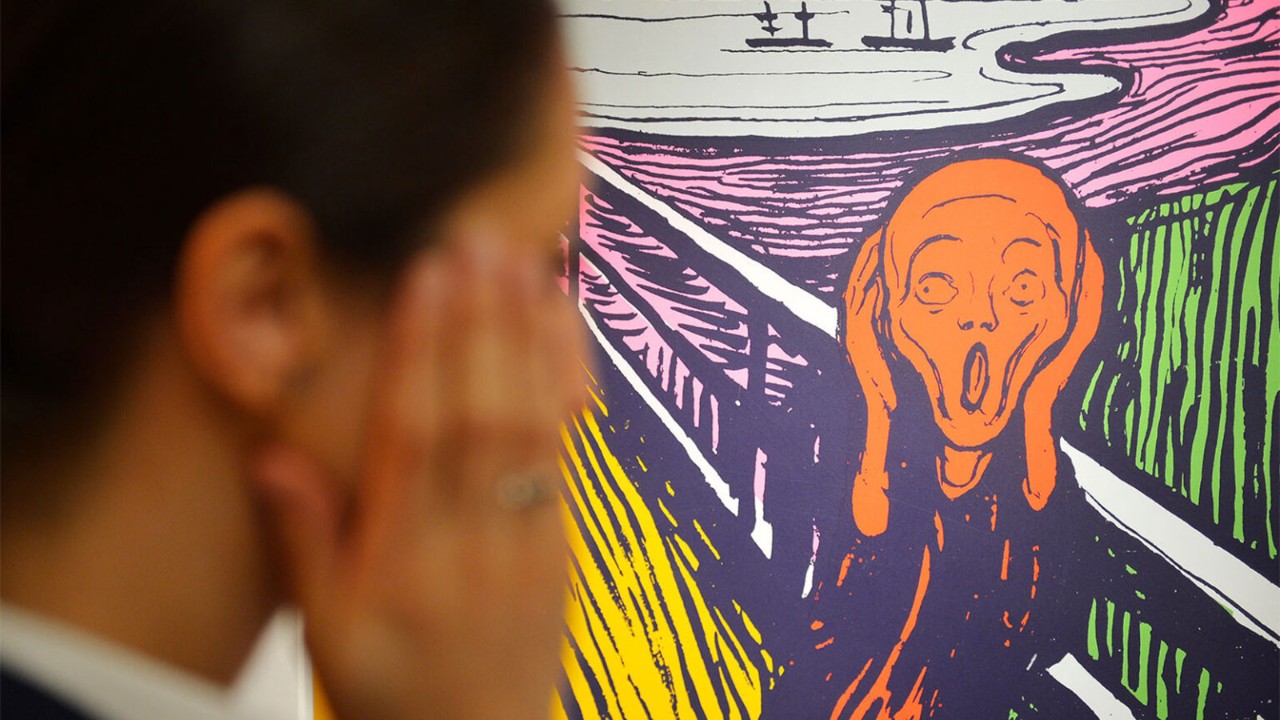
The alternative is to demand a ransom from the gallery or insurer, or to use the art as a bargaining chip. When the 1893 version of Edvard Munch’s The Scream was stolen in 1994, the National Gallery in Oslo received a ransom demand for US$1m for return, and refused to pay. The painting was recovered by police a few months later. (In 2004 the 1910 version was stolen from Oslo’s Munch Museum; it was recovered in 2006.)
Low risk, high profit
For organised crime, valuable stolen art is potential currency, used as payment in illicit deals place of cash. A report by the European Union on the illicit trade in cultural goods in Europe concluded that ‘trafficking in cultural goods is a low-risk, high-profit crime’. It’s reasonably portable, easy to hide, and circumvents the increasingly stringent customer and transaction screening systems used by banks.
The Art Loss Register holds information on more than 700,000 pieces of missing art
The Financial Action Task Force has also warned that the art and antiquities sector is particularly vulnerable to money laundering and, in the case of looted cultural objects, terrorism financing. ‘Pieces of art or cultural objects can attract high prices, retain their value, be purchased in cash on behalf of someone else, and be discreetly transferred between people and businesses before being sold for “clean money”,’ it said.
Hard to recover
While there have been some high-profile successes in terms of recovering stolen art – Rembrandt’s Portrait of Jacob de Gheyn III, which has the misfortune to be both valuable and small enough to be easily concealed, has been stolen and recovered four times from London’s Dulwich Picture Gallery – it is estimated that less than 10% of stolen artworks are eventually recovered.
The volume of missing items worldwide is extraordinary. Interpol maintains a database of more than 50,000 missing artworks and antiquities, while the London-based Art Loss Register, which works free of charge with law-enforcement agencies and governments, and charges a percentage-based fee for private clients, currently holds information on more than 700,000 pieces of missing art.
The exceptional value of famous artworks makes them an irresistible target – and that means we haven’t seen the last of audacious art heists.


