
Aristotelis Glykis ACCA, lawyer, accountant, ACCA prize winning member and chief executive of one of the most promising start-ups in Cyprus, is at home after a late night nursing Didi, one of his two dogs, through an epileptic fit. Yet he is on Teams first thing speaking energetically about his career and the lessons learned on a recent ACCA leadership programme.
Some of those perhaps echo a belief that the way we treat our pets relates directly to the way we treat people. ‘In order to be a leader or a proper manager, you have to grow your team, grow your colleagues and inspire confidence. It’s about the confidence you build in others. It’s not about being the best,’ Glykis says.
‘Whenever I hire somebody, my concern is to make them feel at ease’
Glykis is chief executive of the Cyprus-based TaxApp.cy, a start-up approaching its fourth year that provides automated income tax filing services to individuals as well as other services related to individual taxation. Glykis stepped into the CEO role in February, barely a year after joining the company as a tax manager and head of operations.
Learning to lead
Prior to TaxApp.cy, he had roles with PwC and KPMG, private equity firm ISWM and a period as a policy trainee and project manager in the Justice Directorate at the European Commission. But Glykis is one of those rare accountants – he gained his ACCA qualification in 2021 – who had also qualified as a lawyer after earning a law degree at the UK’s University of Bristol and passing the bar in Cyprus. And he is currently studying for an executive MBA, due to conclude later this year.
As if that weren’t enough, Glykis has recently completed the ACCA Leaders of Tomorrow Programme, a series of interactive seminars and events designed to boost career development. The spirit and content of the programme seem to have harmonised perfectly with the Cypriot’s own way of thinking.
‘You always have to talk with empathy and conviction at the same time’
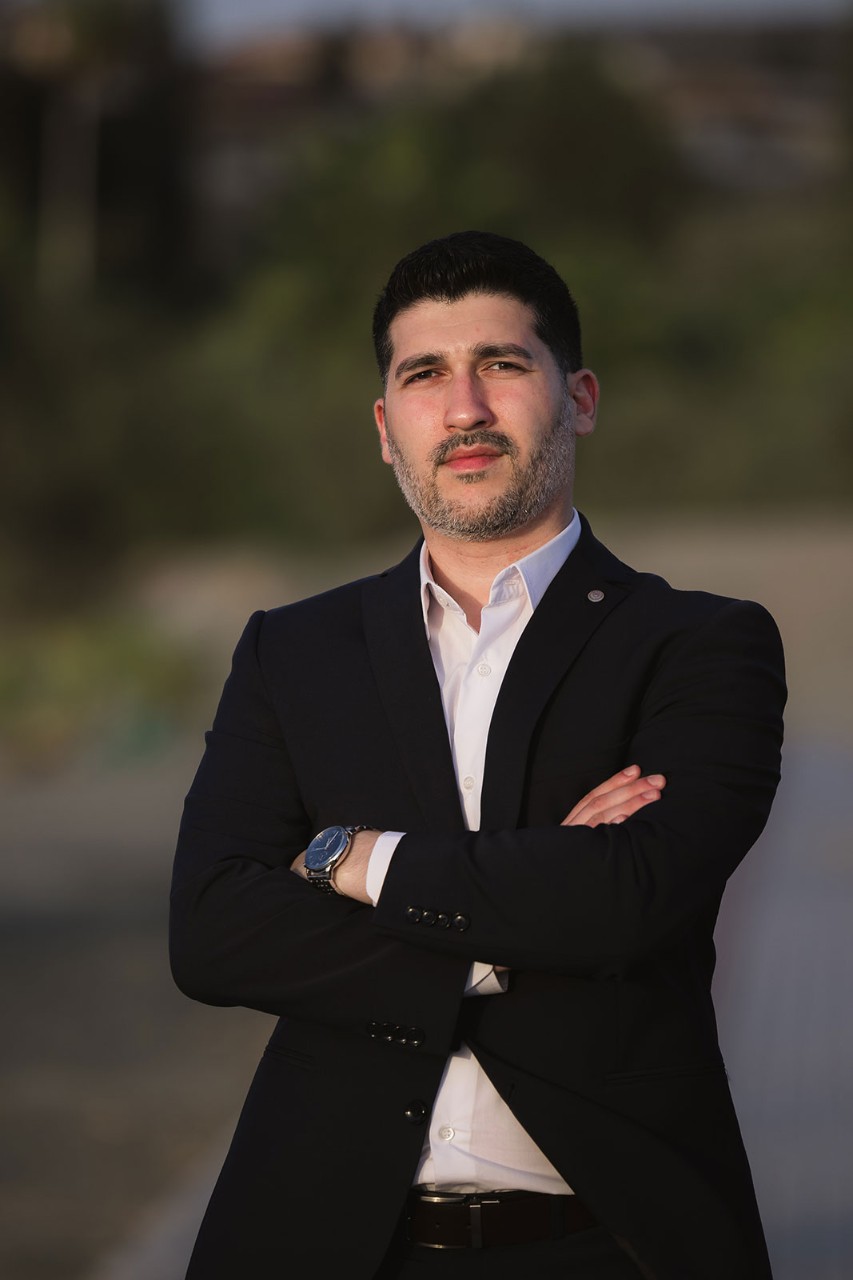
Glykis believes that the programme’s value lies in its exploration of ‘how to lead an organisation, a team, and how to use empathy, self-reflection and self-awareness to re-evaluate who you are as a professional, as an individual, and how you can manage a team and lead a company’.
Employee focused
This leads Glykis to reflect on that motivation of focusing on his employees. ‘Whenever I hire somebody, my concern is to make them feel at ease,’ he says, adding that he asks himself: ‘Am I good at instilling confidence?’
This approach is particularly important now as qualified accountants face a moment of transition in the profession driven by the spread of artificial intelligence- (AI) driven automation of tasks that once would have been the bedrock of an accounting career. That’s going to mean a lot of change for managers to handle.
‘Sometimes you have to be a strict manager or leader to get things done,’ says Glykis, ‘but the human element must never be absent. You always have to talk with empathy and conviction at the same time.’
New way of working
Both will be equally important as Glykis sees new technologies offering ‘one of the biggest opportunities for the profession’. A convert to AI, he notes that the old, maths-driven focus of accounting work will be taken over by software automation, with accountants facing demands to offer strategic insight. This will require a new way of working.
If I am not in charge of myself, then everything else will fall apart
‘You have to be aware of your surroundings or business, of where you’re working and why you’re doing what you’re doing. Accountants are called to be more in touch with their contribution to the business and to society.’
Very human skills will be part of this future, not least the ability to generate trust. ‘You can be technically very competent, both in technology or in your specialisation, but the human element is where you stand out because your character is what will inspire trust in your team, in your leaders, your juniors, your clients, all your stakeholders.’
No shortcuts
Young accountants in a hurry should beware, though; in the age of AI, particularly generative AI (GenAI), they cannot assume that they won’t need technical skills and knowledge. The ACCA qualification, says Glykis, indicates character, discipline and professional experience. But he cautions: ‘There’s no shortcut to anything in life,’ adding that ‘You have to be curious in whatever you do.’
Curiosity, or as Glykis puts it figuratively in Greek, having the skouliki (meaning ‘little worm’), is what drove him through a law degree, then accountancy – more significantly, an interest in tax – and now into a start-up. ‘I have a curious mind. Always,’ he says. ‘I could have chosen corporate life, I still could. But I wanted to combine law, accountancy, finance and technology together with entrepreneurship.’ He adds that he had always wanted to do ‘something of my own’.
‘Human nature can put up with more pressure and stress than we can imagine’
And what are the lessons from being in a start-up? Glykis goes back to some very human themes rather than the technical. ‘I’ve realised human nature can put up with more pressure and stress than we can imagine, coupled with a requirement that you have to be able to manage the stress.’ He’s thankful to have a loving and supportive wife, who is currently expecting their son, along with Didi and his other dog, Mimi, by his side.
The business insight is closely related. If you manage the stress through a healthy work-life balance, it’s easier to solve problems at work. ‘It’s about solving challenges day by day. I’m focused on solving problems and in that way I become better in both the technical aspects of leading and managing as well as in myself.
‘If I am not in charge of myself, then everything else will fall apart.’ Fortunately for Didi, Glykis is in charge of medication, too.


