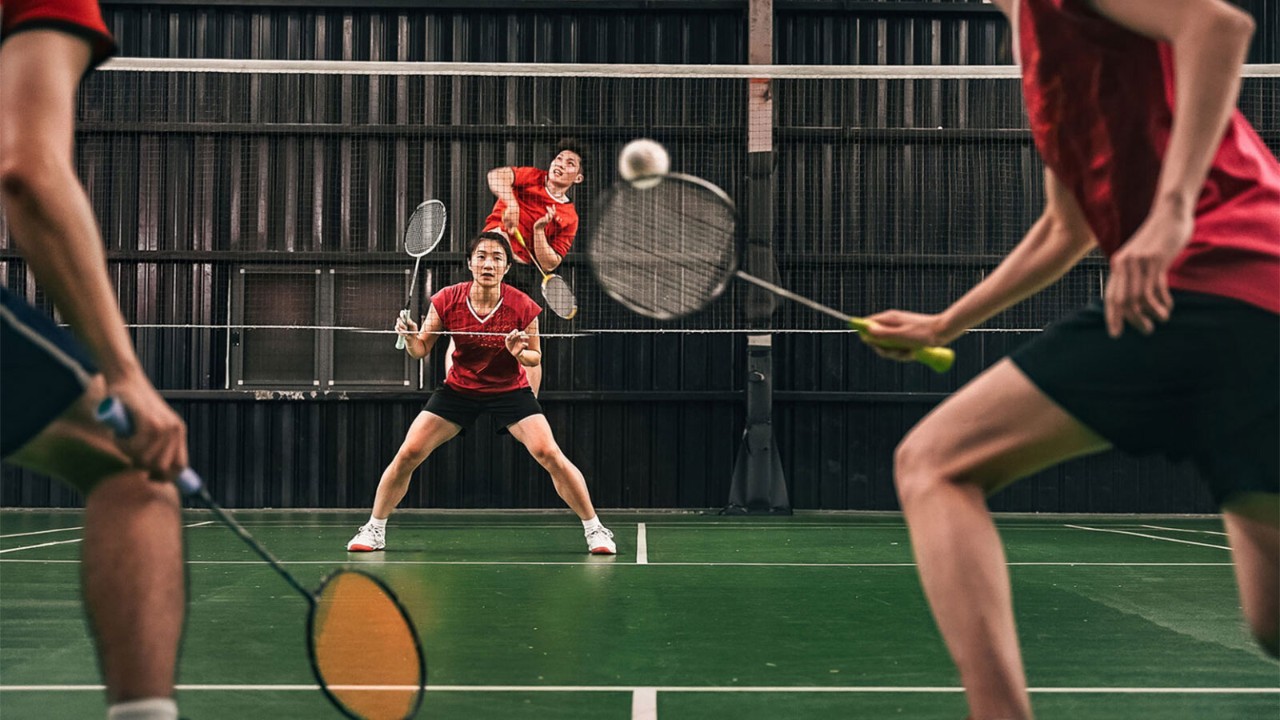
A recent experimental German study of 278 employees made a powerful case for swapping screens for sports. For a week, participants across different professional sectors cut smartphone use by an hour a day and/or did 30 minutes’ extra exercise, such as jogging or football. Just two weeks in, participants reported increased job satisfaction, motivation and work-life balance, a reduction in feelings of overload and fewer symptoms of depression.
The conclusion? That a programme reducing screentime and encouraging physical activity could act as a springboard to improve employees’ professional pleasure and mental health.
In Chennai, futsal is the corporate activity of choice
World of workouts
With World Health Organization data finding 31% of adults fail to achieve 150 minutes of moderate-intensity exercise a week – the bare minimum needed to reduce risk factors for poor physical and cognitive function – forward-thinking workplaces are taking employee health into their own hands.
In Berlin, team-building now happens on the volleyball court. Every Wednesday evening, up to 1,000 employees and new-venture founders thrash it out in the Startup League, where the networking opportunities of a tech conference come with added endorphins.
In Chennai, India, futsal (a variant of five-a-side football) is the corporate activity of choice. Five years ago, the Intellion Futsal League launched with 12 teams. This February, teams from over 100 companies competed, including Amazon and Citi.
Accenture, meanwhile, boasts one of the most comprehensive company sports cultures. In Malaysia, Accenture’s rumah sukan (house teams) battle each other for trophies in badminton and basketball, while Accenture Sweden offers 16 employee sports, 180 annual training sessions and eight competitions, including cross-country skiing and climbing.
Virtuous cycle
As a strategy to reduce employee sick leave, science affirms that company sport has legs. Evidence shows it improves blood pressure, cardiovascular function, metabolic markers (ie less body fat) and musculoskeletal issues such as neck or shoulder pain.
In a study published last year, Jasamine Hill, an assistant professor in sport management at the University of Florida, surveyed 380 members of company sports leagues about how the physical boost from corporate sport affected their life satisfaction. She found a ‘virtuous cycle’, whereby a healthy body led to a healthy mind. Using sport to destress brought peace of mind and improved mood – to the point that Hill believes sport could counter burnout at an institutional level.
Team spirit
So why does company sport bolster health better than chucking a gym pass or mindfulness app at a frazzled worker?
For starters, it improves uptake. ‘For a long time, workplace fitness was symbolic rather than structural – a gym discount that ticked a box but only a minority used, usually those who were already getting benefits from exercise,’ explains Brendon Stubbs, a researcher at King’s College London who specialises in sport’s impact on mental health.
‘Exercising alone can improve mood but rarely provides social buffering’
Second, employee sports bring social benefits that the treadmill cannot – a key issue when post-pandemic hybrid work has weakened bonds. ‘Organised sport is one of the few scalable ways to rebuild connection,’ Stubbs points out. ‘Exercising alone can improve mood, but it rarely provides social buffering against stress or loneliness. Team sports create belonging, shared identity, peer support and routine – all powerful protective factors for mental health.’
Indeed, when workplace sport culture first began in Japan and Korea, it was part of making a business feel like a family, with the ultimate goal of easing labour tensions. Minjung Kim, an assistant professor of sport management at Texas A&M University, confirms that sports improve how much employees like their colleagues and their job.
‘By forming company teams, employees build trust, expand their networks and strengthen communication across departments,’ she says. ‘Even using company names or logos can deepen commitment to the organisation.’ In practice, this emotional attachment translates to reduced employee turnover and fewer hierarchical barriers, aiding integration.
Champions leagues
At a time when moving between companies is viewed by younger employees as a positive step rather than disloyalty, Kim believes companies must look to sport to retain talent. Governing bodies already exist to further the movement. Every two years, the World Federation for Company Sport hosts Olympics-inspired Summer Games, with around 5,000 participants expected for June’s event in Denmark. Last year, the CSIT World Sports Games were held in Greece, bringing together employees from around 60 countries.
That said, sport isn’t always fit for purpose. ‘Being asked to join a team led by one’s supervisor could unintentionally become another source of work-related stress,’ Kim warns.
‘Participation should feel invited and voluntary’
Company sports can also perpetuate existing ‘outgroup dynamics’. Women, for example, may be less able to join out-of-hours sports teams due to caring responsibilities. Passive discrimination can play out by employees intentionally not passing the ball to someone or picking someone last.
For Kim, recognising the constraints is the first step to sporting success. ‘Proactively seek employees’ perspectives and understand their barriers. Participation should feel invited and voluntary, but organisations can encourage involvement through flexible scheduling and non-competitive formats like coaching.’
Done right, she insists company sports can be a team win for everyone. ‘These initiatives go well beyond improving physical health,’ Kim says. ‘Employees gain personal fulfilment and develop pride in their affiliation. Sport isn’t simply a wellness benefit; it’s a strategic tool for fostering personal flourishing and team engagement.’
More information
Fancy combining your twin passions of sport and accountancy? Find out more in the AB article ‘Specialise in: sports and entertainment’


