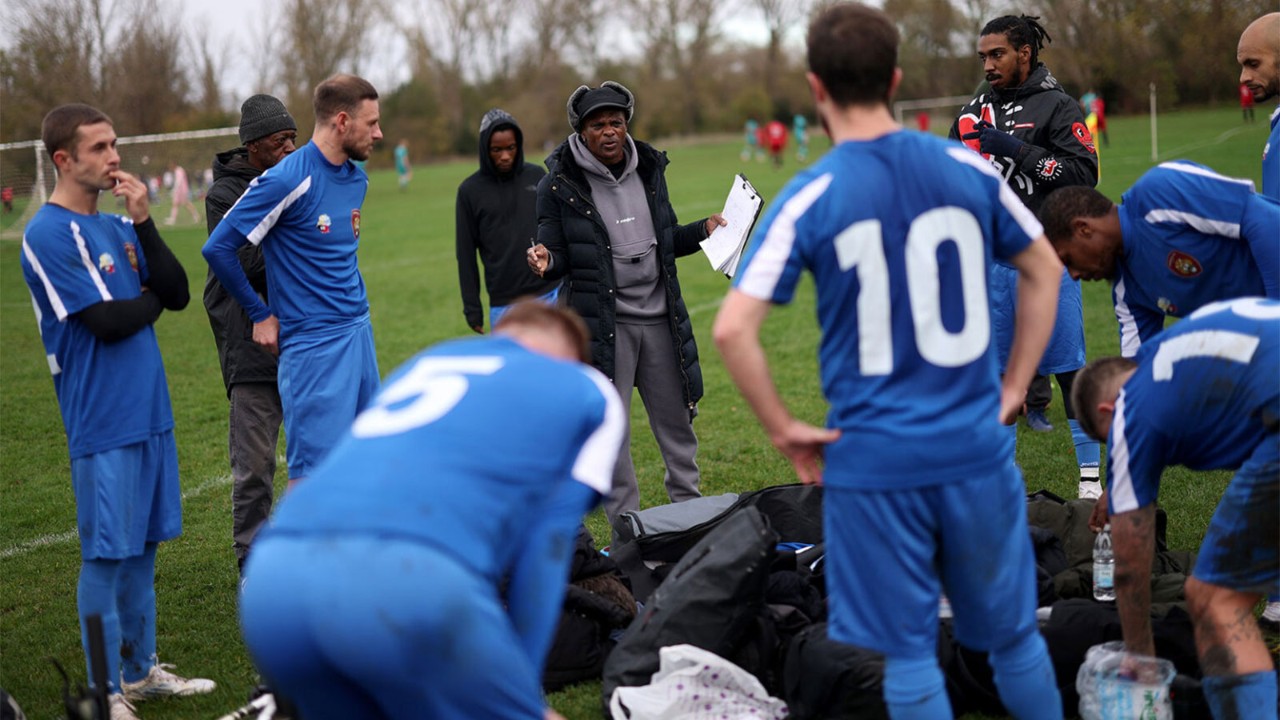
From the Olympics to the World Cup, most elite sportsmen and women on the world stage have one thing in common: their careers started in grassroots sport.
Every week, local clubs, sporting associations and national bodies across the world work up a sweat providing opportunities for children and adult amateurs to compete. But the players don’t get on the pitch without help. Behind every club and association are managers eking out modest budgets to pay for equipment and facilities.
Many are finance professionals – sometimes salaried, sometimes voluntary – drafting the grant applications, pitching to sponsors and collecting memberships fees to ensure the sums add up and the games can go ahead. It is a global effort, but with many similar challenges across jurisdictions.
‘You can’t get referees for free any more’
Australian basketball
‘As finance professionals, we need to help sport make better decisions, to stay sustainable for the future.’ So says Caroline McLuckie FCCA, the CFO for Basketball New South Wales (BNSW), the governing body for the game in the Australian state (see also her AB interview).
BNSW has around 90,000 fee-paying members and oversees 200,000 players of all ages in 82 associations and countless clubs. It has an annual budget of A$11m (US$7.8m) to run competitions and leagues, support development programmes, pay referees and fund facilities. About 40% of the income comes from membership fees, the rest from government grants and sponsorship.
Nearly half of BNSW’s spending goes directly into the game and the rest into overheads. Around one fifth of budget is spent paying referees. ‘You can’t get referees for free any more,’ McLuckie says.
‘Cost of living and political priorities are major financial risks’
It is a challenge to keep all the moving parts together, with the cost of living and political priorities forming two of the biggest financial risks. ‘You might get one government that’s very pro-sport,’ McLuckie says, ‘and then the next government says it’s got to spend money on health and education instead.’
Membership fees are also under pressure. ‘As costs continue to rise, that’s hard for families,’ McLuckie says, ‘but our costs continue to rise as well in terms of overheads.’
Canadian cricket
Though a professional cricketer who has played on the international stage for Canada, Hamza Tariq is also deeply involved in the grassroots game. A former financial controller, he has launched two projects in his home city of Calgary: a coaching academy for up to 150 budding young cricketers from the ages of three to 19, and a charity foundation running coaching and games.
The foundation spends up to C$140,000 (US$100,000) a year running games and coaching. In winter, the split is about 60% on facilities, particularly indoor venues, and 40% on umpires and coaches. In the summer, when the games go outside, the spend split reverses.
‘Our ROI is when a kid is playing with a big smile on their face’
Budget is found through an ever-changing equation of corporate sponsors and government grants. When Calgary completes a dedicated cricket stadium in the city, Tariq will use the accounting skills he acquired at Southern Alberta Institute of Technology to make the case for sponsorship or partnership.
One of the big challenges is foundation administration, as funders want their money to go to front-line activities rather than full-time admin and reporting. Tariq points out: ‘If you want a not-for-profit to succeed, you have to have at least one person full time, depending on your size.’
He remains clear about the foundation’s real measure of success. ‘Our ROI is when a kid is playing and he or she has a big smile on their face.’
South African rugby
‘It’s quite hectic,’ says Pieter Visser, general manager of the Golden Lions Rugby Union, the body that oversees grassroots games in the Gauteng region of rugby-obsessed South Africa. On any given Saturday, it supervises more than 2,000 school, club and provincial games. Many players come from townships, some of the poorest and most insecure areas in Gauteng.
Visser manages all this on R12m–R15m (US$700,000–US$900,000) annually. Around half comes from South Africa Rugby Union, the rest from corporate sponsors and what Visser calls ‘value in kind’ agreements (goods or services in lieu of cash).
‘Female players get dropped off in front of their home’
A large chunk goes on part-time referees, but, outside of admin, the majority is spent on getting players from home to games and practice and back again safely, particularly female players. ‘It becomes our responsibility not only to ensure the female players get from point A to point B, but also that they are dropped back off in front of a house and not a central point.’
What keeps Visser awake is ‘making the budget balance and making sure the funding is fine and pays salaries’. Ensuring activities have longevity is also key. ‘If it’s not sustainable in three years’ time, then you’re sitting with a problem.’
Visser believes governance and financial responsibility is critical to the success of the union. ‘I am privileged to have staff working with me who understand, if you’ve got ten grand, you can only spend ten grand.’
English football
A former CFO and co-CEO at Bolton Wanders FC (see his interview in AB), Niaz Shazad FCCA has taken on numerous voluntary roles while recharging before another full-time post.
He is currently advising the Darnall Education and Sports Academy in the part of Sheffield he grew up in, mentoring young people for sports administration careers, advising Handsworth Cricket Club on sponsorship and fundraising, and acting as a special adviser to the charity Bat for a Chance – to name a few.
‘Any organisation that doesn’t understand its numbers will fail’
Shazad believes financial and management expertise is vital to grassroots sport at a time of cost of living challenges for participants, while income has also become harder to pin down. ‘Fundamentally any organisation that doesn’t understand its numbers is bound to fail,’ he says. Volunteers are full of good ideas for programmes and development, he adds. ‘Unfortunately, they don’t typically carry the resources to follow through on them.’
Above all else, he offers an example to young people that they too can build financial careers. ‘When you see it on those kids’ faces, and you see it click and they think, hold on, maybe I could do that, there’s nothing more joyous.’
More information
Liked this but stumped for further reading? Read our ‘Star quality’ interview with Emma Calvert FCCA, regional director of women’s cricket at Surrey County Cricket Club


