If you play or follow sport, you probably tuck it away on your CV under ‘other interests’, as though it were an antidote to your career. Yet business and sport have much in common. The rewards may differ – trophies and medals versus growth and profit – but the underlying dynamics are remarkably similar.
Both are competitive arenas defined by performance, pressure and the drive to improve. Elite teams such as the New Zealand All Blacks (who boast a 76% win record across more than 650 international test rugby matches in their 123-year history and are viewed by many as the most successful international team of all time in any sport) have built a global reputation not just on talent, but on culture, discipline and strategy. From leadership and teamwork to resilience and marginal gains, sport offers lessons that translate directly into the corporate arena.
In both sport and business, cohesion beats heroics
It’s a lesson that has steadily gained traction in business academia and thought leadership, to the extent that consultancy McKinsey recently argued that CEOs should learn from successful athletes in the way they look after themselves, including ‘perfecting the art of recovery’. And it explains why some successful athletes go on to earn eye-watering amounts on the speaker circuit as experts on leadership, motivation and team building – see below.
So what are the key lessons that business can learn from sport?
Leadership
In sport, leadership is visible and accountable, shaping mindset and culture as well as tactics. Few illustrate this better than basketball’s Phil Jackson, the 13-time NBA champion who won 11 titles as a head coach, more than anyone in history. His teams were defined by discipline, belief and an unwavering standard of excellence.
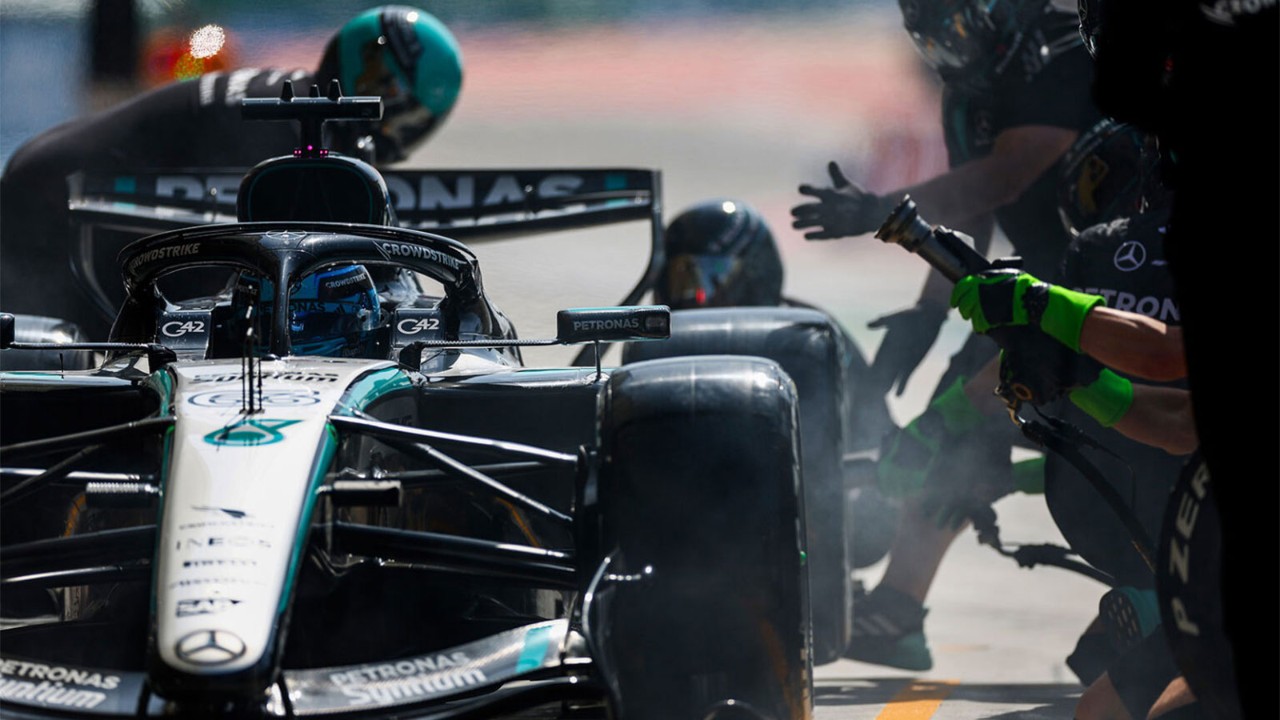
The business world has long looked to sport for lessons in effective leadership. Toto Wolff, CEO of the Mercedes-AMG Petronas Formula 1 team, for example, is the subject of a Harvard Business School case study on leadership and regularly visits Harvard and Oxford University’s Saïd Business School to teach and work with MBA students.
Go hard on the issue and soft on the person
Feedback
Ben Fennell, CEO of The Growth House and co-author of World Class, found during his research with more than 100 elite performers that one behaviour stood out: feedback.
‘They all focused on giving and receiving feedback relentlessly,’ he says. ‘Feedback was delivered in high cadence, often in the moment, given context, made tangible and directional, and always delivered objectively.’ His rule is simple: go hard on the issue and soft on the person.
It’s a mindset that goes against corporate habit. Annual performance reviews feel archaic compared with the constant analysis elite athletes receive after every game. Jeff Grout, a leadership expert and the former business manager of Sir Clive Woodward, who guided England Men’s rugby team to their World Cup win in 2003, agrees. ‘Feedback is seen as a gift in the sports world, but often as criticism in the business world,’ he says. ‘Successful sportspeople have a constant sense of curiosity about how and why things went well or badly – businesspeople could learn a lot from that.’
A common goal
In team sport, talent alone is never enough. Even the most gifted athlete cannot win consistently without the right system and supporting players.
Fennell believes that building high-performance teams starts with difference. ‘Elite teams are packed with cognitive difference, gender difference, ethnic difference and different leadership archetypes,’ he says. Leaders must then ‘forge togetherness’ through shared purpose, mission, values and behaviour. In other words, celebrate difference, but unite around common standards. In both sport and business, cohesion beats heroics.
‘You don’t lose if you get knocked down. You lose if you stay down’
Resilience
Detailed and regular feedback means sportspeople learn from their successes and, more importantly, their failures. What separates winners is not the absence of failure, but their response to it. As the boxer Muhammad Ali once said, ‘You don’t lose if you get knocked down. You lose if you stay down.’
Every athlete loses. Even champions endure setbacks. Michael Jordan was unceremoniously dropped from his high school basketball team before becoming one of the greatest players in history. Resilience is not bravado; it is the ability to genuinely learn from mistakes and return stronger.
Preparation
Sporting success is built long before game day. The concept of marginal gains, popularised by British Cycling, focused on improving dozens of small factors by 1%, and the cumulative effect was extraordinary dominance. Before the early 2000s, British Cycling had limited international success. In the 2008 Beijing Olympics, Team GB won seven out of 10 available track cycling gold medals.
Preparation shapes performance under pressure. ‘Most sports teams train 90% of the time and compete 10%,’ Fennell says. ‘In business it is often the other way around.’ Elite teams simulate high-pressure scenarios, rehearse contingencies and plan for things to go wrong.
‘Perfection is an illusion’
Good habits
Fennell’s research shows that elite teams connect long-term goals to short-term decisions to embed high-performance habits. ‘Elite behaviours cannot exist as one-offs,’ he says. ‘They need to be repeated on a daily basis, by the whole community.’
He is also sceptical of the pursuit of perfection. ‘Perfection is an illusion,’ he argues. ‘No business or model is perfect. Your time is better spent taking an imperfect model and executing it with world-class behaviours.’
In other words, strategy matters, but behaviour matters every bit as much.
More information
You can become a mentor, whatever your sector, with ACCA’s mentoring programme.
And if you’re thinking of a career change, plan your next move with ACCA’s Career Navigator

